The APCO Bone Health QI Tool Kit – Putting a brake on fractures in the world’s most populous & fastest ageing region

NEW DELHI, May 24 – (ACN Newswire) – An osteoporotic fracture occurs every three seconds worldwide. With more than 50 per cent of the world’s hip fractures expected to occur in the Asia Pacific (AP) region over the next two decades, the Asia Pacific Consortium on Osteoporosis (APCO) has launched a Bone Health QI Tool Kit today to promote quality improvement (QI) of osteoporosis care.

This comprehensive tool kit, that encompasses multiple components in the screening, diagnosis and management of osteoporosis, is a world-first of its kind, said Dr Manju Chandran, APCO Chairperson and Director of the Osteoporosis and Bone Metabolism Unit, Singapore General Hospital, Singapore.

“Previous audits have focused on just a single aspect of osteoporosis care, namely the identification and appropriate management of osteoporotic fragility fractures. A perfect storm of a rise in osteoporosis among Asia-Pacific populations is expected to occur due to the region’s rapidly ageing population, mounting urbanisation, and subsequent increase in sedentary lifestyles,”2 Dr Chandran said.

“A recent analysis of nine Asian countries and regions reveals the number of hip fractures will more than double from 1.13 million in 2018, to 2.54 million in 2050,3 primarily due to changing population demographics.”

The APCO Bone Health QI Tool Kit is based on seven selected standards from The APCO Framework that apply to the clinical setting. Implementation of the QI will be through iterative Plan-Do-Study-Act (PDSA) cycles.

“Once the audits are completed, healthcare professionals (HCPs) and medical centres can commence implementing changes to their clinical practice. APCO is in the process of engaging QI experts to help train APCO members to perform such projects in their individual medical centres and practices,” said Dr Chandran.

The tool kit will enable these auditing exercises to be undertaken to establish levels of adherence with those standards of care within The APCO Framework that can be implemented directly into clinical practice.4

Between 2025 and 2050, the population of India is projected to grow from 1.4 billion, to 1.88 billion, with those aged over 50 years expected to constitute 33 per cent of the population by 2050.5 The number of hip fractures in India is anticipated to more than double, from approximately 332,000 in 2018, to 792,000 in 2050,5 noting hip fractures occur a decade earlier in Indian versus Western populations.3 The projected direct cost of hip fractures is expected to increase from USD 256 million (INR 19,839,618,560), to USD 612 million (INR 47,471,309,388) between 2018 and 2050.3

“The likelihood of successfully creating change to stem this bone health crisis will rest largely upon the efforts of HCPs to engage their peers to work towards shared goals. Articulating the benefits of the APCO Bone Health QI activity can help promote engagement and cooperation,” said Professor Ambrish Mithal, APCO Committee member, Endocrinologist, and Chairperson and Head of Endocrinology and Diabetes, Max Healthcare – Pan-Max, Saket, New Delhi, India.

“The critical factors to success include having a supportive organisational culture, good design and planning, and follow through on results, ensuring the data collection is meaningful and achievable. Data collected through the audit should be used to benchmark practice against the standards recommended by The APCO Framework. This will show stakeholders that the audit was worth the effort, and that it contributed to tangible change,” Prof Mithal said.

The APCO audit focuses on investigating the patient pathway, identifying the gaps or missed opportunities for patients at risk, and then the PDSA activity is used to improve quality of care and to formulate recommendations.

“It is hoped that lessons from implementing these clinical standards at the institutional level will be key to achieving change at the national level, through the development, or revision of national guidelines, and policy change,” said Dr Philippe Halbout, CEO, International Osteoporosis Foundation, Switzerland.

“These coordinated systems of care aim to identify, treat and monitor patients with osteoporosis. Timely intervention can reduce fractures by up to 50 per cent, deliver substantial financial savings, and ultimately, save lives.”

Osteoporosis is greatly under-diagnosed and under-treated in Asia, even among those at highest risk who have already fractured.6

The APCO Bone Health QI Tool Kit focuses on closing this gap by:

* Understanding the baseline variables and current state of osteoporosis care in any given institution or health care practice.
* Enabling benchmarking clinical practice against The APCO Framework, evidence-based clinical practice guidelines or established protocols for the chosen standard of care.
* Using the findings to then improve the quality of care through iterative PDSA cycles.
* Using the lessons learned from implementation of the APCO Clinical Standard at an institutional level, to build momentum and work towards inclusion of the quality improvement/clinical standard in national guidelines, and lobbying for funding and policy change, as appropriate.

Practically, PDSA cycles are a quality improvement strategy that tests a change on a small scale. The PDSA builds on the learning from test cycles in a structured way before implementation on a wider scale.7

The PDSA cycles are iterative. Each cycle involves the following four stages:
1. Plan — developing a plan to test the change;
2. Do — carrying out the test;
3. Study — observing and learning; and
4. Act — planning the next change cycle or full implementation.

“Assessment of adherence to pharmacological treatments that are recommended in new or revised osteoporosis clinical guidelines should be undertaken on an ongoing basis, after initiation of therapy, and appropriate corrective action can be taken if treated individuals have become non-adherent,” Dr Chandran advised.

Every patient living with osteoporosis and/or a fragility fracture passes through several points on their journey from diagnosis, through to treatment and follow-up. The interface of this pathway with other entities, for example, referrals to other care givers or departments, post- discharge follow-ups, are also important considerations in the quality of care received.

“The launch of the APCO Bone Health QI Tool Kit demonstrates the organisation’s ongoing commitment to achieving better care for patients with greater consistency in national and regional clinical practice guidelines for the screening, diagnosis, and management of osteoporosis in the Asia Pacific,” said Dr Halbout.

To learn more about the APCO Bone Health QI Tool Kit, visit www.apcobonehealth.org or follow APCO on LinkedIn: asia-pacific-consortium-on-osteoporosis.

About the APCO Bone Health QI Tool Kit

APCO developed the Bone Health QI Tool Kit to enable healthcare providers worldwide, to benchmark their practices against the clinical standards proposed in The APCO Framework. The tool kit provides guidance on undertaking and implementing quality improvement (QI) projects centred around seven key clinical standards for the screening, diagnosis, and management of osteoporosis.

With the key objective of promoting QI of osteoporosis care, the APCO audit focuses on investigating the patient pathway, identifying the gaps, or missed opportunities for patients at risk, and formulating recommendations to address these gaps. Implementation of the QI will be through Plan-Do-Study-Act (PDSA) cycles – a quality improvement strategy that tests a change on a small scale, before implementation on a wider scale. The tool kit offers practical tips on conducting an audit, that generates meaningful data, that can lead ultimately to implementing changes in clinical practices.

About APCO

The Asia Pacific Consortium on Osteoporosis (APCO) comprises 46 osteoporosis experts from 20 countries and regions, charged with developing tangible solutions to the substantive challenges involving osteoporosis management and fracture prevention in this most populated and fastest growing part of the world. APCO’s mission is to engage with relevant stakeholders, including healthcare providers, policy makers and the public, to help develop and implement country and region-specific programs for the prevention and treatment of osteoporosis, and its complication of fragility fractures, in the Asia Pacific. http://www.apcobonehealth.org

About osteoporosis in the Asia Pacific region

* Osteoporosis – the most common disease – is characterised by porous and brittle bones whose density and quality are poor, resulting in structural skeletal deterioration.1
* The Asia Pacific is home to 4.5 billion people with vastly different healthcare systems.8
* In most developing countries of the Asia Pacific, especially in rural areas, DXA technology is not widely available.9
* Low levels of vitamin D are observed region-wide in the Asia Pacific. This can be attributed to several causal factors, including genetic, lifestyle, seasonal and geographical influences.10
* More than 68 per cent of the countries in the IOF’s Asia Pacific’s Regional Audit now have populations that are over 50 per cent urban, and the resulting reduction in sunlight exposure due to pollution and overcrowding, is affecting vitamin D levels, which contribute to osteoporosis risk.10
* Nearly all Asian countries fall far below The Food and Agriculture Organization of the United Nations / World Health Organization (WHO) recommendations for calcium intake of between 1,000 and 1,300 mg/day. The calcium intake for Malaysia, the Philippines and India remains below 500 mg/day.10

DIGITAL MEDIA KIT : http://www.apcotoolkit.org

Asia Pacific Consortium on Osteoporosis (APCO)
secretariat@apcobonehealth.org

References
1. International Osteoporosis Foundation (IOF). Capture the fracture. [Oct, 2021]; https://www.capturethefracture.org/about.
2. Chandran M, et al., Development of the Asia Pacific Consortium on Osteoporosis (APCO) Framework: clinical standards of care for the screening, diagnosis, and management of osteoporosis in the Asia-Pacific region. Osteoporos Int., 2021. 32(7): p. 1249-1275.
3. Cheung, C.-L., et al., An updated hip fracture projection in Asia: The Asian Federation of Osteoporosis Societies study. Osteoporosis and sarcopenia, 2018. 4(1): p. 16-21.
4. Chandran, M., Ebeling, P., Mitchell, P., Nguyen, T., Harmonization of Osteoporosis Guidelines: Paving the Way for Disrupting the Status Quo in Osteoporosis Management in the Asia Pacific. JBMR, 2022.
5. Watts, J., Ambimanyi-Ochom, J, & Sander K, Osteoporosis costing all Australians: A new burden of disease analysis 2012-2022. 2013, Osteoporosis Australia.
6. International Osteoporosis Foundation (IOF). Key statistics for Asia. [cited October 2021]; https://www.osteoporosis.foundation/facts-statistics/key-statistic-for-asia.
7. NHS England and NHS Improvement. Plan, Do, Study, Act (PDSA) cycles and the model for improvement. https://www.england.nhs.uk/wp-content/uploads/2022/01/qsir-pdsa-cycles-model-for-improvement.pdf.
8. Wang, P., et al., Estimation of Prevalence of Osteoporosis Using OSTA and Its Correlation with Sociodemographic Factors, Disability and Comorbidities. International journal of environmental research and public health, 2019. 16(13): p. 2338.
9. Chandran, M., et al., IQ driving QI: the Asia Pacific Consortium on Osteoporosis (APCO): an innovative and collaborative initiative to improve osteoporosis care in the Asia Pacific. Osteoporos Int, 2020. 31(11): p. 2077-2081.
10. International Osteoporosis Foundation (IOF). The Asia-Pacific Regional Audit. 2013 [cited May 2022]; https://www.osteoporosis.foundation/sites/iofbonehealth/files/2019-06/2013_Asia_Pacific_Audit_English.pdf.


Copyright 2022 ACN Newswire. All rights reserved. http://www.acnnewswire.com
The APCO Bone Health QI Tool Kit – Putting a brake on fractures in the world’s most populous & fastest ageing region

SELANGOR, MALAYSIA, May 24 – (ACN Newswire) – An osteoporotic fracture occurs every three seconds worldwide.1 With more than 50 per cent of the world’s hip fractures expected to occur in the Asia Pacific (AP) region over the next two decades, the Asia Pacific Consortium on Osteoporosis (APCO) has launched a Bone Health QI Tool Kit today (May 24, 2022), to promote quality improvement (QI) of osteoporosis care.

This comprehensive tool kit, that encompasses multiple components in the screening, diagnosis and management of osteoporosis, is a world-first of its kind, said Dr Manju Chandran, APCO Chairperson and Director of the Osteoporosis and Bone Metabolism Unit, Singapore General Hospital, Singapore.

“Previous audits have focused on just a single aspect of osteoporosis care, namely the identification and appropriate management of osteoporotic fragility fractures. A perfect storm of a rise in osteoporosis among Asia-Pacific populations is expected to occur due to the region’s rapidly ageing population, mounting urbanisation, and subsequent increase in sedentary lifestyles,”2 Dr Chandran said.

“A recent analysis of nine Asian countries and regions reveals the number of hip fractures will more than double from 1.13 million in 2018, to 2.54 million in 2050,3 primarily due to changing population demographics.”

The APCO Bone Health QI Tool Kit is based on seven selected standards from The APCO Framework that apply to the clinical setting. Implementation of the QI will be through iterative Plan-Do-Study-Act (PDSA) cycles.

“Once the audits are completed, healthcare professionals (HCPs) and medical centres can commence implementing changes to their clinical practice. APCO is in the process of engaging QI experts to help train APCO members to perform such projects in their individual medical centres and practices,” said Dr Chandran.

The tool kit will enable these auditing exercises to be undertaken to establish levels of adherence with those standards of care within The APCO Framework that can be implemented directly into clinical practice.4

Advancing age, reduced body weight, and minimal physical activity significantly predicts osteoporosis in men, while older age, low body weight, and low-income status significantly predicts osteoporosis in women 5, according to Dr Fen Lee Hew, APCO Committee member, Consultant Physician and Endocrinologist, Puchong Medical Specialist Centre and Subang Jaya Medical Centre (SJMC), Malaysia.

“Concerningly, the Malaysian population is ageing rapidly. Those aged 50 years and over are expected to increase from 5.3 million in 2013, to 13.9 million in 2050.5 Furthermore, Malaysia is expected to experience a 3.55-fold increase in hip fracture incidence by 2050, compared to 2018.5

“The likelihood of successfully creating change to stem this bone health crisis will rest largely upon the efforts of HCPs to engage their peers to work towards shared goals. Articulating the benefits of the APCO Bone Health QI activity can help promote engagement and cooperation.

“The critical factors to success include having a supportive organisational culture, good design and planning, and follow through on results, ensuring the data collection is meaningful and achievable,” Dr Hew said.

“Data collected through the audit should be used to benchmark practice against the standards recommended by The APCO Framework. This will show stakeholders that the audit was worth the effort, and that it contributed to tangible change.”

“It is hoped that lessons from implementing these clinical standards at the institutional level will be key to achieving change at the national level, through the development, or revision of national guidelines, and policy change,” said Dr Philippe Halbout, CEO, International Osteoporosis Foundation, Switzerland.

“These coordinated systems of care aim to identify, treat and monitor patients with osteoporosis. Timely intervention can reduce fractures by up to 50 per cent, deliver substantial financial savings, and ultimately, save lives.”

Osteoporosis is greatly under-diagnosed and under-treated in Asia, even among those at highest risk who have already fractured.6

The APCO Bone Health QI Tool Kit focuses on closing this gap by:

* Understanding the baseline variables and current state of osteoporosis care in any given institution or health care practice.
* Enabling benchmarking clinical practice against The APCO Framework, evidence-based clinical practice guidelines or established protocols for the chosen standard of care.
* Using the findings to then improve the quality of care through iterative PDSA cycles.
* Using the lessons learned from implementation of the APCO Clinical Standard at an institutional level, to build momentum and work towards inclusion of the quality improvement/clinical standard in national guidelines, and lobbying for funding and policy change, as appropriate.

Practically, PDSA cycles are a quality improvement strategy that tests a change on a small scale. The PDSA builds on the learning from test cycles in a structured way before implementation on a wider scale.7

The PDSA cycles are iterative. Each cycle involves the following four stages:
1. Plan — developing a plan to test the change;
2. Do — carrying out the test;
3. Study — observing and learning; and
4. Act — planning the next change cycle or full implementation.

“Assessment of adherence to pharmacological treatments that are recommended in new or revised osteoporosis clinical guidelines should be undertaken on an ongoing basis, after initiation of therapy, and appropriate corrective action can be taken if treated individuals have become non-adherent,” Dr Chandran advised.

Every patient living with osteoporosis and/or a fragility fracture passes through several points on their journey from diagnosis, through to treatment and follow-up. The interface of this pathway with other entities, for example, referrals to other care givers or departments, post- discharge follow-ups, are also important considerations in the quality of care received.

“The launch of the APCO Bone Health QI Tool Kit demonstrates the organisation’s ongoing commitment to achieving better care for patients with greater consistency in national and regional clinical practice guidelines for the screening, diagnosis, and management of osteoporosis in the Asia Pacific,” said Dr Halbout.

To learn more about the APCO Bone Health QI Tool Kit, visit www.apcobonehealth.org or follow APCO on LinkedIn: asia-pacific-consortium-on-osteoporosis.

About the APCO Bone Health QI Tool Kit

APCO developed the Bone Health QI Tool Kit to enable healthcare providers worldwide, to benchmark their practices against the clinical standards proposed in The APCO Framework. The tool kit provides guidance on undertaking and implementing quality improvement (QI) projects centred around seven key clinical standards for the screening, diagnosis, and management of osteoporosis.

With the key objective of promoting QI of osteoporosis care, the APCO audit focuses on investigating the patient pathway, identifying the gaps, or missed opportunities for patients at risk, and formulating recommendations to address these gaps. Implementation of the QI will be through Plan-Do-Study-Act (PDSA) cycles – a quality improvement strategy that tests a change on a small scale, before implementation on a wider scale. The tool kit offers practical tips on conducting an audit, that generates meaningful data, that can lead ultimately to implementing changes in clinical practices.

About APCO

The Asia Pacific Consortium on Osteoporosis (APCO) comprises 46 osteoporosis experts from 20 countries and regions, charged with developing tangible solutions to the substantive challenges involving osteoporosis management and fracture prevention in this most populated and fastest growing part of the world. APCO’s mission is to engage with relevant stakeholders, including healthcare providers, policy makers and the public, to help develop and implement country and region-specific programs for the prevention and treatment of osteoporosis, and its complication of fragility fractures, in the Asia Pacific. http://www.apcobonehealth.org

About osteoporosis in the Asia Pacific region

* Osteoporosis – the most common disease – is characterised by porous and brittle bones whose density and quality are poor, resulting in structural skeletal deterioration.1
* The Asia Pacific is home to 4.5 billion people with vastly different healthcare systems.8
* In most developing countries of the Asia Pacific, especially in rural areas, DXA technology is not widely available.9
* Low levels of vitamin D are observed region-wide in the Asia Pacific. This can be attributed to several causal factors, including genetic, lifestyle, seasonal and geographical influences.10
* More than 68 per cent of the countries in the IOF’s Asia Pacific’s Regional Audit now have populations that are over 50 per cent urban, and the resulting reduction in sunlight exposure due to pollution and overcrowding, is affecting vitamin D levels, which contribute to osteoporosis risk.10
* Nearly all Asian countries fall far below The Food and Agriculture Organization of the United Nations / World Health Organization (WHO) recommendations for calcium intake of between 1,000 and 1,300 mg/day. The calcium intake for Malaysia, the Philippines and India remains below 500 mg/day.10

DIGITAL MEDIA KIT : http://www.apcotoolkit.org

Asia Pacific Consortium on Osteoporosis (APCO)
secretariat@apcobonehealth.org

References
1. International Osteoporosis Foundation (IOF). Capture the fracture. [Oct, 2021]; Available from: https://www.capturethefracture.org/about
2. Chandran M, et al., Development of the Asia Pacific Consortium on Osteoporosis (APCO) Framework: clinical standards of care for the screening, diagnosis, and management of osteoporosis in the Asia-Pacific region. Osteoporos Int., 2021. 32(7): p. 1249-1275.
3. Cheung, C.-L., et al., An updated hip fracture projection in Asia: The Asian Federation of Osteoporosis Societies study. Osteoporosis and sarcopenia, 2018. 4(1): p. 16-21.
4. Chandran, M., Ebeling, P., Mitchell, P., Nguyen, T., Harmonization of Osteoporosis Guidelines: Paving the Way for Disrupting the Status Quo in Osteoporosis Management in the Asia Pacific. JBMR, 2022.
5. Watts, J., Ambimanyi-Ochom, J, & Sander K, Osteoporosis costing all Australians: A new burden of disease analysis 2012-2022. 2013, Osteoporosis Australia.
6. International Osteoporosis Foundation (IOF). Key statistics for Asia. [cited October 2021]; https://www.osteoporosis.foundation/facts-statistics/key-statistic-for-asia
7. NHS England and NHS Improvement. Plan, Do, Study, Act (PDSA) cycles and the model for improvement. https://www.england.nhs.uk/wp-content/uploads/2022/01/qsir-pdsa-cycles-model-for-improvement.pdf
8. Wang, P., et al., Estimation of Prevalence of Osteoporosis Using OSTA and Its Correlation with Sociodemographic Factors, Disability and Comorbidities. International journal of environmental research and public health, 2019. 16(13): p. 2338.
9. Chandran, M., et al., IQ driving QI: the Asia Pacific Consortium on Osteoporosis (APCO): an innovative and collaborative initiative to improve osteoporosis care in the Asia Pacific. Osteoporos Int, 2020. 31(11): p. 2077-2081.
10. International Osteoporosis Foundation (IOF). The Asia-Pacific Regional Audit. 2013 [cited May 2022]; https://www.osteoporosis.foundation/sites/iofbonehealth/files/2019-06/2013_Asia_Pacific_Audit_English.pdf


Copyright 2022 ACN Newswire. All rights reserved. http://www.acnnewswire.com

The APCO Bone Health QI Tool Kit – Putting a brake on fractures in the world’s most populous & fastest ageing region

8TAIPEI, May 24 – (ACN Newswire) – An osteoporotic fracture occurs every three seconds worldwide.1 With more than 50 per cent of the world’s hip fractures expected to occur in the Asia Pacific (AP) region over the next two decades, the Asia Pacific Consortium on Osteoporosis (APCO) has launched a Bone Health QI Tool Kit today (May 24, 2022), to promote quality improvement (QI) of osteoporosis care.

This comprehensive tool kit, that encompasses multiple components in the screening, diagnosis and management of osteoporosis, is a world-first of its kind, said Dr Manju Chandran, APCO Chairperson and Director of the Osteoporosis and Bone Metabolism Unit, Singapore General Hospital, Singapore.

“Previous audits have focused on just a single aspect of osteoporosis care, namely the identification and appropriate management of osteoporotic fragility fractures. A perfect storm of a rise in osteoporosis among Asia-Pacific populations is expected to occur due to the region’s rapidly ageing population, mounting urbanisation, and subsequent increase in sedentary lifestyles,”2 Dr Chandran said.

“A recent analysis of nine Asian countries and regions reveals the number of hip fractures will more than double from 1.13 million in 2018, to 2.54 million in 2050,3 primarily due to changing population demographics.”

The APCO Bone Health QI Tool Kit is based on seven selected standards from The APCO Framework that apply to the clinical setting. Implementation of the QI will be through iterative Plan-Do-Study-Act (PDSA) cycles.

“Once the audits are completed, healthcare professionals (HCPs) and medical centres can commence implementing changes to their clinical practice. APCO is in the process of engaging QI experts to help train APCO members to perform such projects in their individual medical centres and practices,” said Dr Chandran.

The tool kit will enable these auditing exercises to be undertaken to establish levels of adherence with those standards of care within The APCO Framework that can be implemented directly into clinical practice.4

“Given the current increasing incidence of osteoporosis amongst our population, our country now has the highest prevalence of hip fracture of any country in Asia, which is also higher than the world’s average,”6 said Professor Derrick Chan, APCO Committee member and Director, Department of Geriatrics and Gerontology, National Taiwan University Hospital (NTUH), Chinese Taipei.

“The likelihood of successfully creating change to stem this bone health crisis will rest largely upon the efforts of HCPs to engage their peers to work towards shared goals. Articulating the benefits of the APCO Bone Health QI activity can help promote engagement and cooperation.

“The critical factors to success include having a supportive organisational culture, good design and planning, and follow through on results, ensuring the data collection is meaningful and achievable,” Professor Chan said.

“Data collected through the audit should be used to benchmark practice against the standards recommended by The APCO Framework. This will show stakeholders that the audit was worth the effort, and that it contributed to tangible change.”

The APCO audit focuses on investigating the patient pathway, identifying the gaps or missed opportunities for patients at risk, and then the PDSA activity is used to improve quality of care and to formulate recommendations.

“It is hoped that lessons from implementing these clinical standards at the institutional level will be key to achieving change at the national level, through the development, or revision of national guidelines, and policy change,” said Dr Philippe Halbout, CEO, International Osteoporosis Foundation, Switzerland.

“These coordinated systems of care aim to identify, treat and monitor patients with osteoporosis. Timely intervention can reduce fractures by up to 50 per cent, deliver substantial financial savings, and ultimately, save lives.”

Osteoporosis is greatly under-diagnosed and under-treated in Asia, even among those at highest risk who have already fractured.6

The APCO Bone Health QI Tool Kit focuses on closing this gap by:

* Understanding the baseline variables and current state of osteoporosis care in any given institution or health care practice.
* Enabling benchmarking clinical practice against The APCO Framework, evidence-based clinical practice guidelines or established protocols for the chosen standard of care.
* Using the findings to then improve the quality of care through iterative PDSA cycles.
* Using the lessons learned from implementation of the APCO Clinical Standard at an institutional level, to build momentum and work towards inclusion of the quality improvement/clinical standard in national guidelines, and lobbying for funding and policy change, as appropriate.

Practically, PDSA cycles are a quality improvement strategy that tests a change on a small scale. The PDSA builds on the learning from test cycles in a structured way before implementation on a wider scale.7

The PDSA cycles are iterative. Each cycle involves the following four stages:
1. Plan — developing a plan to test the change;
2. Do — carrying out the test;
3. Study — observing and learning; and
4. Act — planning the next change cycle or full implementation.

“Assessment of adherence to pharmacological treatments that are recommended in new or revised osteoporosis clinical guidelines should be undertaken on an ongoing basis, after initiation of therapy, and appropriate corrective action can be taken if treated individuals have become non-adherent,” Dr Chandran advised.

Every patient living with osteoporosis and/or a fragility fracture passes through several points on their journey from diagnosis, through to treatment and follow-up. The interface of this pathway with other entities, for example, referrals to other care givers or departments, post- discharge follow-ups, are also important considerations in the quality of care received.

“The launch of the APCO Bone Health QI Tool Kit demonstrates the organisation’s ongoing commitment to achieving better care for patients with greater consistency in national and regional clinical practice guidelines for the screening, diagnosis, and management of osteoporosis in the Asia Pacific,” said Dr Halbout.

To learn more about the APCO Bone Health QI Tool Kit, visit www.apcobonehealth.org or follow APCO on LinkedIn: asia-pacific-consortium-on-osteoporosis.

About the APCO Bone Health QI Tool Kit

APCO developed the Bone Health QI Tool Kit to enable healthcare providers worldwide, to benchmark their practices against the clinical standards proposed in The APCO Framework. The tool kit provides guidance on undertaking and implementing quality improvement (QI) projects centred around seven key clinical standards for the screening, diagnosis, and management of osteoporosis.

With the key objective of promoting QI of osteoporosis care, the APCO audit focuses on investigating the patient pathway, identifying the gaps, or missed opportunities for patients at risk, and formulating recommendations to address these gaps. Implementation of the QI will be through Plan-Do-Study-Act (PDSA) cycles – a quality improvement strategy that tests a change on a small scale, before implementation on a wider scale. The tool kit offers practical tips on conducting an audit, that generates meaningful data, that can lead ultimately to implementing changes in clinical practices.

About APCO

The Asia Pacific Consortium on Osteoporosis (APCO) comprises 46 osteoporosis experts from 20 countries and regions, charged with developing tangible solutions to the substantive challenges involving osteoporosis management and fracture prevention in this most populated and fastest growing part of the world. APCO’s mission is to engage with relevant stakeholders, including healthcare providers, policy makers and the public, to help develop and implement country and region-specific programs for the prevention and treatment of osteoporosis, and its complication of fragility fractures, in the Asia Pacific. http://www.apcobonehealth.org

About osteoporosis in the Asia Pacific region

* Osteoporosis – the most common disease – is characterised by porous and brittle bones whose density and quality are poor, resulting in structural skeletal deterioration.1
* The Asia Pacific is home to 4.5 billion people with vastly different healthcare systems.8
* In most developing countries of the Asia Pacific, especially in rural areas, DXA technology is not widely available.9
* Low levels of vitamin D are observed region-wide in the Asia Pacific. This can be attributed to several causal factors, including genetic, lifestyle, seasonal and geographical influences.10
* More than 68 per cent of the countries in the IOF’s Asia Pacific’s Regional Audit now have populations that are over 50 per cent urban, and the resulting reduction in sunlight exposure due to pollution and overcrowding, is affecting vitamin D levels, which contribute to osteoporosis risk.10
* Nearly all Asian countries fall far below The Food and Agriculture Organization of the United Nations / World Health Organization (WHO) recommendations for calcium intake of between 1,000 and 1,300 mg/day. The calcium intake for Malaysia, the Philippines and India remains below 500 mg/day.10

DIGITAL MEDIA KIT : http://www.apcotoolkit.org

Asia Pacific Consortium on Osteoporosis (APCO)
secretariat@apcobonehealth.org

References
1. International Osteoporosis Foundation (IOF). Capture the fracture. [Oct, 2021]; Available from: https://www.capturethefracture.org/about.
2. Chandran M, et al., Development of the Asia Pacific Consortium on Osteoporosis (APCO) Framework: clinical standards of care for the screening, diagnosis, and management of osteoporosis in the Asia-Pacific region. Osteoporos Int., 2021. 32(7): p. 1249-1275.
3. Cheung, C.-L., et al., An updated hip fracture projection in Asia: The Asian Federation of Osteoporosis Societies study. Osteoporosis and sarcopenia, 2018. 4(1): p. 16-21.
4. Chandran, M., Ebeling, P., Mitchell, P., Nguyen, T., Harmonization of Osteoporosis Guidelines: Paving the Way for Disrupting the Status Quo in Osteoporosis Management in the Asia Pacific. JBMR, 2022.
5. Watts, J., Ambimanyi-Ochom, J, & Sander K, Osteoporosis costing all Australians: A new burden of disease analysis 2012-2022. 2013, Osteoporosis Australia.
6. International Osteoporosis Foundation (IOF). Key statistics for Asia. [cited October 2021]; Available from: https://www.osteoporosis.foundation/facts-statistics/key-statistic-for-asia.
7. NHS England and NHS Improvement. Plan, Do, Study, Act (PDSA) cycles and the model for improvement. From: https://www.england.nhs.uk/wp-content/uploads/2022/01/qsir-pdsa-cycles-model-for-improvement.pdf.
8. Wang, P., et al., Estimation of Prevalence of Osteoporosis Using OSTA and Its Correlation with Sociodemographic Factors, Disability and Comorbidities. International journal of environmental research and public health, 2019. 16(13): p. 2338.
9. Chandran, M., et al., IQ driving QI: the Asia Pacific Consortium on Osteoporosis (APCO): an innovative and collaborative initiative to improve osteoporosis care in the Asia Pacific. Osteoporos Int, 2020. 31(11): p. 2077-2081.
10. International Osteoporosis Foundation (IOF). The Asia-Pacific Regional Audit. 2013 [cited May 2022]; Available from: https://www.osteoporosis.foundation/sites/iofbonehealth/files/2019-06/2013_Asia_Pacific_Audit_English.pdf.


Copyright 2022 ACN Newswire. All rights reserved. http://www.acnnewswire.com
The APCO Bone Health QI Tool Kit – Putting a brake on fractures in the world’s most populous & fastest ageing region

SINGAPORE, May 24, 2022 – (ACN Newswire) – An osteoporotic fracture occurs every three seconds worldwide.1 With more than 50 per cent of the world's hip fractures expected to occur in the Asia Pacific (AP) region over the next two decades, the Asia Pacific Consortium on Osteoporosis (APCO) has launched a Bone Health QI Tool Kit today (May 24, 2022), to promote quality improvement (QI) of osteoporosis care.


Asia Pacific Consortium on Osteoporosis (APCO) launched a comprehensive Bone Health QI Tool Kit today to promote quality improvement (QI) of osteoporosis care. (May 24, 2022)


This comprehensive tool kit, that encompasses multiple components in the screening, diagnosis and management of osteoporosis, is a world-first of its kind, said Dr Manju Chandran, APCO Chairperson and Director of the Osteoporosis and Bone Metabolism Unit, Singapore General Hospital, Singapore.

"Previous audits have focused on just a single aspect of osteoporosis care, namely the identification and appropriate management of osteoporotic fragility fractures. A perfect storm of a rise in osteoporosis among Asia-Pacific populations is expected to occur due to the region's rapidly ageing population, mounting urbanisation, and subsequent increase in sedentary lifestyles,"2 Dr Chandran said.

"A recent analysis of nine Asian countries and regions reveals the number of hip fractures will more than double from 1.13 million in 2018, to 2.54 million in 2050,3 primarily due to changing population demographics."

The APCO Bone Health QI Tool Kit is based on seven selected standards from The APCO Framework that apply to the clinical setting. Implementation of the QI will be through iterative Plan-Do-Study-Act (PDSA) cycles.

"Once the audits are completed, healthcare professionals (HCPs) and medical centres can commence implementing changes to their clinical practice. APCO is in the process of engaging QI experts to help train APCO members to perform such projects in their individual medical centres and practices," said Dr Chandran.

The tool kit will enable these auditing exercises to be undertaken to establish levels of adherence with those standards of care within The APCO Framework that can be implemented directly into clinical practice.4

This year in Australia, an estimated 6.2 million people aged over 50 years will be living with osteoporosis or osteopenia, representing a 31 per cent increase from 2012,5 said Dr Greg Lyubomirsky, CEO, Healthy Bones Australia.

"The likelihood of successfully creating change to stem this bone health crisis will rest largely upon the efforts of HCPs to engage their peers to work towards shared goals. Articulating the benefits of the APCO Bone Health QI activity can help promote engagement and cooperation.

"The critical factors to success include having a supportive organisational culture, good design and planning, and follow through on results, ensuring the data collection is meaningful and achievable," Dr Lyubomirsky said.

"Data collected through the audit should be used to benchmark practice against the standards recommended by The APCO Framework. This will show stakeholders that the audit was worth the effort, and that it contributed to tangible change."

The APCO audit focuses on investigating the patient pathway, identifying the gaps or missed opportunities for patients at risk, and then the PDSA activity is used to improve quality of care and to formulate recommendations.

"It is hoped that lessons from implementing these clinical standards at the institutional level will be key to achieving change at the national level, through the development, or revision of national guidelines, and policy change," said Dr Philippe Halbout, CEO, International Osteoporosis Foundation, Switzerland.

"These coordinated systems of care aim to identify, treat and monitor patients with osteoporosis. Timely intervention can reduce fractures by up to 50 per cent, deliver substantial financial savings, and ultimately, save lives."

Osteoporosis is greatly under-diagnosed and under-treated in Asia, even among those at highest risk who have already fractured.6

The APCO Bone Health QI Tool Kit focuses on closing this gap by:
— Understanding the baseline variables and current state of osteoporosis care in any given institution or health care practice.
— Enabling benchmarking clinical practice against The APCO Framework, evidence-based clinical practice guidelines or established protocols for the chosen standard of care.
— Using the findings to then improve the quality of care through iterative PDSA cycles.
— Using the lessons learned from implementation of the APCO Clinical Standard at an institutional level, to build momentum and work towards inclusion of the quality improvement/clinical standard in national guidelines, and lobbying for funding and policy change, as appropriate.

Practically, PDSA cycles are a quality improvement strategy that tests a change on a small scale. The PDSA builds on the learning from test cycles in a structured way before implementation on a wider scale.7

The PDSA cycles are iterative. Each cycle involves the following four stages:
1. Plan — developing a plan to test the change;
2. Do — carrying out the test;
3. Study — observing and learning; and
4. Act — planning the next change cycle or full implementation.

"Assessment of adherence to pharmacological treatments that are recommended in new or revised osteoporosis clinical guidelines should be undertaken on an ongoing basis, after initiation of therapy, and appropriate corrective action can be taken if treated individuals have become non-adherent," Dr Chandran advised.

Every patient living with osteoporosis and/or a fragility fracture passes through several points on their journey from diagnosis, through to treatment and follow-up. The interface of this pathway with other entities, for example, referrals to other care givers or departments, post- discharge follow-ups, are also important considerations in the quality of care received.

"The launch of the APCO Bone Health QI Tool Kit demonstrates the organisation's ongoing commitment to achieving better care for patients with greater consistency in national and regional clinical practice guidelines for the screening, diagnosis, and management of osteoporosis in the Asia Pacific," said Dr Halbout.

To learn more about the APCO Bone Health QI Tool Kit,
visit www.apcobonehealth.org or follow APCO on LinkedIn: asia-pacific-consortium-on-osteoporosis.

About the APCO Bone Health QI Tool Kit

APCO developed the Bone Health QI Tool Kit to enable healthcare providers worldwide, to benchmark their practices against the clinical standards proposed in The APCO Framework. The tool kit provides guidance on undertaking and implementing quality improvement (QI) projects centred around seven key clinical standards for the screening, diagnosis, and management of osteoporosis.

With the key objective of promoting QI of osteoporosis care, the APCO audit focuses on investigating the patient pathway, identifying the gaps, or missed opportunities for patients at risk, and formulating recommendations to address these gaps. Implementation of the QI will be through Plan-Do-Study-Act (PDSA) cycles – a quality improvement strategy that tests a change on a small scale, before implementation on a wider scale. The tool kit offers practical tips on conducting an audit, that generates meaningful data, that can lead ultimately to implementing changes in clinical practices.

About APCO

The Asia Pacific Consortium on Osteoporosis (APCO) comprises 46 osteoporosis experts from 20 countries and regions, charged with developing tangible solutions to the substantive challenges involving osteoporosis management and fracture prevention in this most populated and fastest growing part of the world. APCO's mission is to engage with relevant stakeholders, including healthcare providers, policy makers and the public, to help develop and implement country and region-specific programs for the prevention and treatment of osteoporosis, and its complication of fragility fractures, in the Asia Pacific. www.apcobonehealth.org

About osteoporosis in the Asia Pacific region

* Osteoporosis – the most common disease – is characterised by porous and brittle bones whose density and quality are poor, resulting in structural skeletal deterioration.1
* The Asia Pacific is home to 4.5 billion people with vastly different healthcare systems.8
* In most developing countries of the Asia Pacific, especially in rural areas, DXA technology is not widely available.9
* Low levels of vitamin D are observed region-wide in the Asia Pacific. This can be attributed to several causal factors, including genetic, lifestyle, seasonal and geographical influences.10
* More than 68 per cent of the countries in the IOF's Asia Pacific's Regional Audit now have populations that are over 50 per cent urban, and the resulting reduction in sunlight exposure due to pollution and overcrowding, is affecting vitamin D levels, which contribute to osteoporosis risk.10
* Nearly all Asian countries fall far below The Food and Agriculture Organization of the United Nations / World Health Organization (WHO) recommendations for calcium intake of between 1,000 and 1,300 mg/day. The calcium intake for Malaysia, the Philippines and India remains below 500 mg/day.10

DIGITAL MEDIA KIT: www.apcotoolkit.org

Asia Pacific Consortium on Osteoporosis (APCO)
secretariat@apcobonehealth.org

References
1. International Osteoporosis Foundation (IOF). Capture the fracture. [Oct, 2021]; Available from: https://www.capturethefracture.org/about.
2. Chandran M, et al., Development of the Asia Pacific Consortium on Osteoporosis (APCO) Framework: clinical standards of care for the screening, diagnosis, and management of osteoporosis in the Asia-Pacific region. Osteoporos Int., 2021. 32(7): p. 1249-1275.
3. Cheung, C.-L., et al., An updated hip fracture projection in Asia: The Asian Federation of Osteoporosis Societies study. Osteoporosis and sarcopenia, 2018. 4(1): p. 16-21.
4. Chandran, M., Ebeling, P., Mitchell, P., Nguyen, T., Harmonization of Osteoporosis Guidelines: Paving the Way for Disrupting the Status Quo in Osteoporosis Management in the Asia Pacific. JBMR, 2022.
5. Watts, J., Ambimanyi-Ochom, J, & Sander K, Osteoporosis costing all Australians: A new burden of disease analysis 2012-2022. 2013, Osteoporosis Australia.
6. International Osteoporosis Foundation (IOF). Key statistics for Asia. [cited October 2021]; Available from: https://www.osteoporosis.foundation/facts-statistics/key-statistic-for-asia.
7. NHS England and NHS Improvement. Plan, Do, Study, Act (PDSA) cycles and the model for improvement. From: https://www.england.nhs.uk/wp-content/uploads/2022/01/ qsir-pdsa-cycles-model-for-improvement.pdf.
8. Wang, P., et al., Estimation of Prevalence of Osteoporosis Using OSTA and Its Correlation with Sociodemographic Factors, Disability and Comorbidities. International Journal of Environmental Research and Public Health, 2019. 16(13): p. 2338.
9. Chandran, M., et al., IQ driving QI: the Asia Pacific Consortium on Osteoporosis (APCO): an innovative and collaborative initiative to improve osteoporosis care in the Asia Pacific. Osteoporos Int, 2020. 31(11): p. 2077-2081.
10. International Osteoporosis Foundation (IOF). The Asia-Pacific Regional Audit. 2013 [cited May 2022]; From: https://www.osteoporosis.foundation/sites/iofbonehealth/files/2019-06/ 2013_Asia_Pacific_Audit_English.pdf

Copyright 2022 ACN Newswire. All rights reserved. http://www.acnnewswire.com

Launch of World-first Expert Bone Health Resource

MELBOURNE, May 23, 2022 – (ACN Newswire) – An osteoporotic fracture occurs every three seconds worldwide.(1) More than 50 per cent of the world's hip fractures are expected to occur in the Asia Pacific over the next two decades.(2) This is due to the region's rapidly aging population, mounting urbanisation, and subsequent increase in sedentary lifestyles.(2)


A digital media kit is available at www.apcotoolkit.org.

In an effort to stem this health crisis, the Asia Pacific Consortium on Osteoporosis (APCO) will launch a Bone Health QI Tool Kit for healthcare professionals on Tuesday, May 24, 2022, to promote quality improvement of osteoporosis care.

This world-first tool kit, encompassing multiple components in the screening, diagnosis, and management of osteoporosis, will help to promote multi-sector healthcare professional engagement and cooperation, to address this looming healthcare catastrophe.

– Osteoporosis – the most common disease – is characterised by porous and brittle bones, whose density and quality are poor, resulting in structural skeletal deterioration.(1)
– The disease is greatly under-diagnosed, and under-treated in Asia, even among those at highest risk who have already fractured.(3)
– The Asia Pacific is home to 4.5 billion people and vastly different healthcare systems.(4)
– Over the next two decades, a staggering 319 million people aged 50+ from the Asia Pacific are projected to be at high risk of osteoporotic fracture.(5)
– Moreover, the number of hip fractures are projected to more than double in Asia, from 1.13 million in 2018, to 2.54 million in 2050.(5)

References:
(1) International Osteoporosis Foundation (IOF). Capture the fracture. [Oct, 2021]; Available from: https://www.capturethefracture.org/about.
(2) Chandran M, et al., Development of the Asia Pacific Consortium on Osteoporosis (APCO) Framework: clinical standards of care for the screening, diagnosis, and management of osteoporosis in the Asia-Pacific region. Osteoporos Int., 2021. 32(7): p. 1249-1275.
(3) International Osteoporosis Foundation. Key statistics for Asia. [cited October 2022]; Available from: https://www.osteoporosis.foundation/facts-statistics/key-statistic-for-asia.
(4) Oden, A., et al., Burden of high fracture probability worldwide: secular increases 2010-2040. Osteoporos Int, 2015.26(9): p. 2243-8.
(5) Cheung, C.-L., et al., An updated hip fracture projection in Asia: The Asian Federation of Osteoporosis Societies study. Osteoporosis and sarcopenia, 2018. 4(1): p. 16-21.

For more information contact:
Kirsten Bruce
kirstenbruce@vivacommunications.com.au

Copyright 2022 ACN Newswire. All rights reserved. http://www.acnnewswire.com

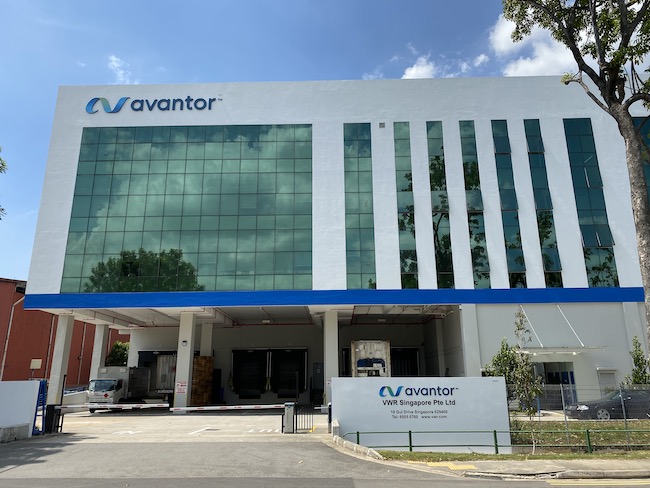
Avantor Announces Investment in Manufacturing and Distribution Hub in Singapore to Serve Rapidly Growing Asia Pacific Biopharma Industry

Singapore, May 5, 2022 – (ACN Newswire) – Avantor, Inc. (NYSE: AVTR), a leading global provider of mission-critical products and services to customers in the life sciences, advanced technologies and applied materials industries, today announced it will create a new manufacturing and distribution Hub in Singapore, by integrating its existing distribution facility with new manufacturing operations. The new Hub, which brings Avantor solutions closer to regional customers and strengthens global supply chain capabilities, will be fully operational early next year.


Avantor announced it will create a new Manufacturing and Distribution Hub in Singapore by integrating its existing distribution facility with new manufacturing operations.


"The Singapore Manufacturing and Distribution Hub will enable Avantor to better serve the fast-growing Asia Pacific Biopharma market by facilitating shorter lead times, enhancing supply chain security and increasing capacity in the region," said Christophe Couturier, Executive Vice President, AMEA, Avantor. "The Hub will boost regional innovation and serve as an industry benchmark for Singapore and Asia Pacific's global quality and regulatory standards, and demonstrates Avantor's commitment to growing our presence in the region."

The new Hub will provide a range of services including quality control and inventory management expertise, and feature cGMP manufacturing suites and testing labs for process ingredients and excipients.

About Avantor

Avantor, a Fortune 500 company, is a leading global provider of mission-critical products and services to customers in the biopharma, healthcare, education & government, and advanced technologies & applied materials industries. Our portfolio is used in virtually every stage of the most important research, development and production activities in the industries we serve. Our global footprint enables us to serve more than 225,000 customer locations and gives us extensive access to research laboratories and scientists in more than 180 countries. We set science in motion to create a better world.

For more information, visit https://news.avantorsciences.com/home and find us on:
LinkedIn: https://www.linkedin.com/company/avantorinc/
Twitter: https://twitter.com/Avantor_News
Facebook: https://www.facebook.com/Avantorinc/

Regional Media Contact
Christina Koh
Director, Communications – AMEA
Avantor
M: +65 9720 0169
Christina.Koh@avantorsciences.com

Copyright 2022 ACN Newswire. All rights reserved. http://www.acnnewswire.com

Cryoviva Singapore Expands Cord Blood Banking Services to Bahrain

Singapore, Sep 7, 2021 – (ACN Newswire) – Local family cord blood bank Cryoviva Singapore (https://cryoviva.com.sg) is continuing with its rapid geographic growth plans with an entry into the Bahrain market. This latest new market entry closely follows Cryoviva establishing a footprint in Dubai to serve couples in the UAE that are on the family way.


Rajesh Nair, CEO of Cryoviva Singapore


"It fills the entire Cryoviva team with a great sense of pride and satisfaction to help customers in Bahrain and add another nation to the list of countries we serve from Singapore. We are steadfastly focused on our goal to give every family the chance to benefit from the medical potential of cord component stem cells should they ever need it. Every new market we enter and serve successfully is another step closer to that goal," says Rajesh Nair, CEO of Cryoviva Singapore.

"Our excellent credentials as a well-established cord blood bank with a proven track record, experienced medical and management teams and strong investor backing make us a reliable and trustworthy provider for young families in Bahrain. Equally importantly, I believe that customers in Bahrain get considerable confidence and reassurance from Singapore's reputation for world-class facilities and strict adherence to high quality standards. We look forward to collaborating with healthcare providers in Bahrain offering maternity services to offer greater service to their valued patients."

Rajesh believes that while Cryoviva continues with its expansion plans into more countries in the Middle East and ASEAN, Singapore continues to be extremely important for the company. "While we have made considerable progress in the relatively short span of 7 years here, we are striving hard to be the top family cord blood bank in Singapore. We strongly believe in the immense potential for growth in cord blood banking here and are confident that our expertise, experience and delivery of top-notch customer service will contribute to convincing more families on the long-term healthcare benefits of the services we offer."

About Cryoviva Singapore

Established in 2014, Cryoviva (https://cryoviva.com.sg) is a reputed family cord blood bank in Singapore. The company is part of an international group that is backed by reputed multinational investor organisations. The Cryoviva group has successfully stored over 160,000 umbilical cord blood units. Cryoviva's cord blood storage facility in Singapore is MoH-licensed, AABB accredited and IS ISO 9001:2015 QMS Certified, testaments to the stringent processes and quality standards that it adheres to. Thanks to being centrally located and proximity to most major maternity hospitals in Singapore, cord blood samples reach its facilities very quickly and efficiently to ensure top quality maintenance upon storage.

Media Contact:
Krish Sharma, General Manager, Cryoviva Singapore
Tel: +65-9651 7080
E-mail: krish@cryoviva.com.sg

Copyright 2021 ACN Newswire. All rights reserved. http://www.acnnewswire.com
Witness Twelve MedTech Startups showcasing latest HealthTech Innovations

TAIPEI, TW, Aug 23, 2021 – (ACN Newswire) – SC Hospital (SCMH) and IRCAD Taiwan are collaborating with BE Accelerator, the largest healthcare accelerator in Asia, to present Batch 5, 'DemoDay 2021: Applied Technologies for Minimally Invasive Surgery'. It's the celebration of 12 brilliant startups x 24 intensive weeks, sharing their applied technologies and solutions for minimally invasive surgery, medical devices, and AI-based healthcare, shaping the future of the industry today.


Incubated for 24 weeks, the twelve startups and accelerator teams collaborated with mentors and partners to make this acceleration program remarkable. As the world marks a year and a half of intense disruption by the COVID pandemic, our teams demonstrated extraordinary resilience in coming up with significant innovative solutions through the digital transformation of our program.

We are excited to host this year's Demo Day, live and online August 28, celebrating the progress of our twelve startups as they graduate from our 24-week Proof of Concept (POC) program, to explore opportunities for new programs or offering Health-Tech and further MedTech collaboration. [https://reurl.cc/EnAG9m].

Our 12 accomplished startups from Taiwan, Thailand, and Canada :

– EPED, Inc., Taiwan
A leader in the field of minimally invasive surgery, developing real-time, adaptive medical and dental navigation systems and solutions, with augmented reality AR-based technologies for precision medicine and education.

– Meticuly Co., Ltd., Thailand
Thailand based startup, provider of personalized, cutting-edge 3D printing implant solutions for bone-related surgeries. The end-to-end platform produces personalized bone implants with SLM 3D printing technology.

– Asia PathoGenomics, Inc., Taiwan
Startup providing high throughput, precision pathogen detection services called Metagenomic Next-Generation Sequencing (mNGS). The non-culture based, hypothesis-free precision diagnosis of infectious diseases provides early identification of pathogens and allows for rapid adjustment of therapies.

– Dot Space Biotechnology, Taiwan
Startup involved in measuring intra-abdominal pressure for the clinical prevention of Acute Compartment Syndrome. The system consists of an abdominal capsulized pressure detector/sensor that can be swallowed by patients for continuous measurement of intra-abdominal pressure.

– INOPASE, Japan
Entrepreneurial concept with wireless miniaturized implant neuromodulation for Overactive Bladder (OAB) and Fecal Incontinence (FI) treatment. Current implant neuromodulation requires multiple implantation surgeries and still has additional safety issues, INOPASE is closing the gap to improve the treatment efficacy.

– Medscope Biotech Co., Ltd., Taiwan
Brilliant startup that minimizes the risk during Minimally Invasive Surgery, or MIS. created a 15 degrees slope design for better visibility. Anti-drop jaw design helps ensure a surgeon won't drop e,tra clips during operations (which happens occasionally..).

– Protect Biotech Co. Ltd., Taiwan
Committed to the research and development of companion animal immunotherapy drugs, to become the leader in pet disease immunotherapy in the Pan-Asia region. Protect Biotech currently has the world's first broad-spectrum animal cancer treatment product PT001, ready to enter clinical trials.

– Wiseger Corp., Taiwan
Innovative concept that develops biochemical detecting systems with microfluidic technology. Wisergers is committed to supplying affordable, fast and convenient products for biochemical detection for food safety and blood tests.

– Smart Surgery Technology Co., Ltd., Taiwan
Startup that improves the quality of surgeries and records surgical procedures intensively. Smart Surgery's visual computing AI model includes a surgery simulation system, automatic medical image labelling and a surgery assistance system to better facilitate education in surgical operations.

– Point Robotics MedTech, Inc., Taiwan
Operating room innovations and minimally invasive solutions that reduce variability in surgery, lower surgery risks, reduce medical costs, shorten recovery times and improve precision in surgeries.

– AltumView Systems, Canada
Canada-based AI startup that focuses on the development of smart vision technology for elderly care, rehabilitation, behavioral and cognitive health solutions. Seminare is a revolutionary smart activity sensor for senior care.

– HemoCath, Canada
Another Canada-based startup that guides diagnosis, treatment, and monitoring of inpatients and outpatients with heart failure (HF). HemoCath Intelligent HF Monitoring Platform reduces hospital length of stay and rehospitalization.

Registration
All participants of the virtual demo day will have access to the event live and the recorded video. Moreover, we will have an exclusive campaign for registered VIPs in our mailing list, including VIP booklets files and the opportunity to attend 1-1 facilitated introductions with the founders.

Please RSVP to be included in the VIP mailing list at https://pse.is/3m2uu9
When ticket purchases are completed, you are able to enter the live stream directly from the ticket page.

Show Chwan x BE Demo Day 2021 : Sat, Aug 28 14:00~16:30 P.M. UTC+8

Batch 5 Agenda
14:00 – 14:05 Opening
14:05 – 14:08 Opening Remarks
14:08 – 14:18 SCMH x BE Introduction
14:18 – 14:25 David & Thomas
14:25 – 15:10 Pitch Session
15:10 – 15:20 Break
15:20 – 16:20 Pitch Session
16:20 – 16:30 Dr. Lee panel

An event by IRCAD Taiwan and BE Accelerator:
https://www.beaccelerator.com.tw/
https://www.facebook.com/beaccelerator/
https://www.linkedin.com/company/be-accelerator/
https://www.instagram.com/be_accelerator_tw/

About BE Accelerator
BE Accelerator is the leading biomedical venture capital fund and venture accelerator in Taiwan, focused on early-stage biomedical start-ups entering the Asian market, has nurtured 72 biomedical start-ups thru 5 editions (8/2021) and assisted teams to raise over US$70 million. We leverage the unique strengths of our thriving ecosystem to position as the "Gateway to Asia for HealthTech and MedTech, Local+International."

BE Accelerator is expanding its local and international biomedical ecosystem, including hospitals, investors, R&D, manufacturing and government to help worthy startups, not only from Taiwan but from across the globe to break into the Asian market. Visit www.beaccelerator.com.tw.

About SCMH – Show Chwan Memorial Hospital
'Show Chwan' originated with the commemoration of President Huang Min-Ho's late father. It represents an aspiration to show concern for the elderly, love for the young, and care for everyone's health. Show Chwan is a hand-in-hand family healthcare system currently with eight hospitals. For medical and healthcare, President Huang advocates the spirit of Mayo Clinic in establishing a sound rural hospital system, allowing people in the most remote areas to enjoy the quality medical care found in cosmopolitan cities. Visit www.scmh.org.tw.

About IRCAD Taiwan
In 1994, IRCAD opened on the grounds of the University Hospital of Strasbourg, gaining renown over the years as a leading research, technology and surgical education institute. The Asian Institute of Telesurgery (AITS/IRCAD-Taiwan), created in 2008 under the guidance of IRCAD/EITS, is now an alliance with Show Chwan Health Care System, bringing 800 international experts affiliated with IRCAD/EITS into closer proximity with Asian surgeons, providing the same level of excellence in education while saving time and money in travelling. Tens of thousands of surgeons from the world over have come to IRCAD-Taiwan to obtain high-level skills, find cutting-edge technology and pioneering medical devices. Visit www.ircadtaiwan.com.

Contact:
BE Accelerator
Polly Chen
Polly@behealthventures.com
https://www.beaccelerator.com.tw

Copyright 2021 ACN Newswire. All rights reserved. http://www.acnnewswire.com

Avantor Named Best Company in Bioprocessing Excellence for Single-use Solutions and Best Bioprocessing Supplier for Upstream Processing at Biologics Manufacturing Korea 2021

Seoul, Korea, June 25, 2021 – (ACN Newswire) – Avantor, a leading global provider of mission-critical products and services to customers in the life sciences and advanced technologies and applied materials industries, was named best company in bioprocessing excellence for single-use solutions and best bioprocessing supplier for upstream processing at Biologics Manufacturing Korea (BMK) 2021.

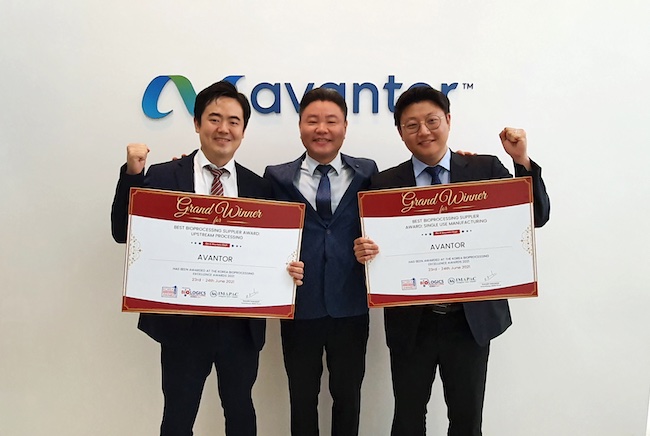
Sang Kyu Lee, Representative Director – Avantor Korea/Japan(centre), Jin Young Lee, Biopharma Business Manager – Avantor Korea/Japan(left), James Hwang, Innovation Center Field Application & Education Manager – Avantor Korea/Japan(right), after receiving the Awards for Best Company in Single-use Solutions and Upstream Processing at BMK 2021.

This is the second consecutive year Avantor has been selected as the best company in the single-use category at BMK. As the development and supply of biopharmaceuticals, including COVID-19 vaccines and therapeutics, become more important than ever, Avantor has been actively supporting the discovery to delivery of biopharmaceutical therapies to both domestic and foreign pharmaceutical companies. A key piece of this contribution is supplying differentiated upstream solutions such as high-purity materials.

Avantor also has been recognized for its ongoing efforts to develop single-use solutions, which are emerging as the preferred option to improving biopharmaceutical manufacturing processes. Avantor is responding to rapidly increasing needs for treatments and therapies by providing customized solutions to biopharma companies. Avantor closely analyzes manufacturing processes to support customers with increased yield and reduced resources when developing new therapeutics.

SK Lee, Sales Director of Avantor Korea & Japan, said, “We are extremely proud to be recognized by BMK for our leadership in bioprocessing development by providing solutions to biopharmaceutical manufacturers. Working closely with our customers, we play a critical role in enabling breakthroughs in life-changing biologics.”

Narayana Rao Rapolu, Vice President, Biopharma Asia Middle East & Africa for Avantor said, “Avantor’s continued investment in single-use solutions, including our recent acquisition of RIM Bio, with manufacturing capabilities in China, go a long way to demonstrate our commitment to delivering bioprocessing excellence. Our process development and optimization capabilities carried out by our dedicated expert researchers at our Korea Innovation Center is helping customers deliver on cost and time efficiencies.”

For more information on Avantor’s single-use solution for biopharmaceutical manufacturing, visit https://youtu.be/mfjZEfO_RVM.

About Avantor

Avantor®, a Fortune 500 company, is a leading global provider of mission-critical products and services to customers in the biopharma, healthcare, education & government, and advanced technologies & applied materials industries. Our portfolio is used in virtually every stage of the most important research, development and production activities in the industries we serve. Our global footprint enables us to serve more than 225,000 customer locations and gives us extensive access to research laboratories and scientists in more than 180 countries. We set science in motion to create a better world. For information, visit and find us on LinkedIn, Twitter and Facebook.

About Biologics Manufacturing Korea Excellence Award 2021

The Biologics Manufacturing Korea Excellence Award seeks to give recognition to exceptional bioprocessing experts, organizations and technologies that facilitate biomanufacturing excellence with enhanced speed, reduced cost, and superior quality. 2021 marks the tenth year of ABEA. The BMK Awards is part of the Asia-Pacific Bioprocessing Excellence Awards (ABEA) which seeks to recognize organizations within Korea who have engaged in substantial efforts to innovate, optimize processes and uphold a high level of efficacy, quality and safety in biological products manufacturing.

AMEA Media Contact
Christina Koh
Director – Communications, AMEA
Avantor
Phone: +65 9170 0169
Email: Christina.Koh@avantorsciences.com


Copyright 2021 ACN Newswire. All rights reserved. http://www.acnnewswire.com

World-first Hip Fracture Registry Toolbox striving to improve care for the 1 million+ who fracture a hip in Asia Pacific each year

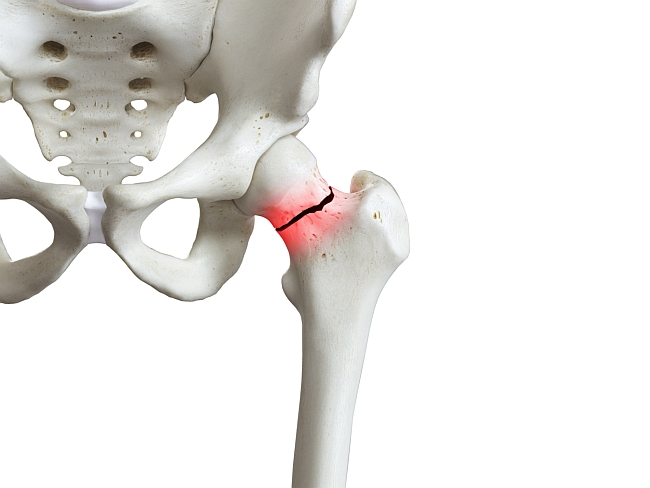
An innovative world-first Hip Fracture Registry Toolbox has been launched today (Tuesday, June 15, 2021) to address the alarming death and disability caused by the more than 1 million hip fractures sustained in the Asia Pacific each year.(1)

Developed by the Asia Pacific Fragility Fracture Alliance (APFFA) in collaboration with the Fragility Fracture Network (FFN), the practical and informative resource explains the fundamental need, and how to best advocate for, the establishment of a national hip fracture registry. Tailored to clinicians, hospital administrators, healthcare systems and governments alike, the Toolbox covers pertinent topics, including stakeholder engagement and consolidation, building a case for change, planning and funding a registry, to setting up a pilot registry and navigating governance and ethics approval. Examples of current registries and other useful resources also feature in the Toolbox.

Concerningly, one-in-four patients who sustain a hip fracture die within a year, and less than half of those who survive, regain their previous level of function.(2-5) The expected direct incurred cost associated with the more than 1.1 million hip fractures estimated to have occurred in nine countries and regions in APAC, including China, Chinese Taipei, Hong Kong SAR, India, Japan, Malaysia, Singapore, South Korea and Thailand in 2018, amounts to USD 7.5 billion. This cost is projected to increase to almost USD 13 billion by 2050.(1)

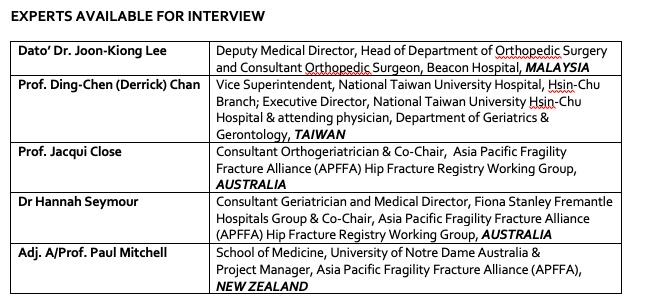
According to Consultant Ortho-Geriatrician, Clinical Director of the Falls, Balance and Injury Research Centre at Neuroscience Research Australia (NeuRA), and APFFA Hip Fracture Registry Working Group Co-Chair, Professor Jacqui Close, Australia, widescale implementation of hip fracture registries worldwide, can facilitate vast improvements in care for the millions of people who sustain a hip fracture each year.(6,7)

“Hospitals can utilise hip fracture registries to benchmark their provision of care against best practice clinical standards for acute care, rehabilitation, and secondary fracture prevention.(6,8)

“Furthermore, hip fracture registries can transform patient-level data into information that both equips and empowers hospital teams to identify, and develop solutions for key challenges within their respective institutions, and to strive for ongoing improvement in care,”(8) said Prof Close.

By 2050, one in four people in APAC will be aged over 60. This portion of the population is expected to triple between 2010 and 2050, reaching close to 1.3 billion people.(9) Within the same timeframe, between 4.5 to 6.3 million hip fractures are predicted to occur worldwide, half of which will occur in Asia.(10)

Given the exponential increase in both the incidence and costs associated with hip fractures to date, and those anticipated globally,(11) hip fracture registries serve as a vital tool underpinning quality improvement initiatives(8) in the Asia Pacific region, and globally, argues Consultant Geriatrician and Medical Director, Fiona Stanley Fremantle Hospitals Group, and APFFA Hip Fracture Registry Working Group Co-Chair, Dr Hannah Seymour, Australia.

“As of April 2021, 18 countries across Asia Pacific, Europe, Latin America and North America had established a hip fracture registry, at different stages of maturation, participation and development.(12-28) Notably, only three registries are currently operating in the Asia Pacific.

“The Hip Fracture Registry Toolbox explains how timely, reliable and constructive feedback to clinical teams, coupled with the engagement and participation of key stakeholders, improves the impact of hip fracture registries,” Dr Seymour said.

With adequate operational efficiency and funding, registries can improve healthcare, and are likely to prove significantly cost-effective.(29)

Registries can contribute to government initiatives designed to manage rapidly aging populations, and can further help governments to promote the equitable provision of care.(30)

According to Orthopaedic Surgeon and APFFA co-Chair, Dato’ Dr. Joon-Kiong Lee, Malaysia, today’s release of the Toolbox also coincides with the launch of APFFA’s YouTube channel.

“The APFFA YouTube channel will house a series of educational videos featuring interviews with leading clinicians from the Asia Pacific bone arena, reflecting on important considerations for each of the seven key steps involved in establishing a hip fracture registry.

“We trust our APFFA and FFN Toolbox, and supporting videos, will arm our colleagues throughout Asia Pacific, and the rest of the world, with the necessary inspiration, knowledge and guidance on how to successfully establish a national hip fracture registry in their respective countries,” said Dato’ Dr Lee.

About APFFA

Formed in November 2018, APFFA comprises seven global and regional member organisations from the geriatrics, orthopaedics, osteoporosis and rehabilitation sectors, with the primary purpose of driving policy change, improving awareness and changing political and professional mindsets, to facilitate optimal fragility fracture management across Asia Pacific.

About the APFFA HFR Working Group

The APFFA Hip Fracture Registry Working Group is a principal action group within APFFA, comprising global experts in hip fracture treatment and management, charged with driving the development of the HFR Toolbox.

In addition, the HFRWG report on hip fracture epidemiology and outcomes across Asia Pacific aims to frame the problems facing the region, and outline APFFA-related projects capable of providing a part solution to these issues.

The HFRWG is also responsible for a feasibility study examining the costs and practicalities of establishing new hip fracture registries in specific countries throughout Asia Pacific.

About the Fragility Fracture Network (FFN)

The FFN is a global organisation comprising a multidisciplinary network of experts charged with improving the treatment and secondary prevention of fragility fractures. The organisation strives to optimise multidisciplinary management of a patient with a fragility fracture, to ensure maximum recovery, quality of life, and no further fractures, worldwide.

The Hip Fracture Audit Special Interest Group (HFA SIG) comprises a multidisciplinary network of clinicians well-versed in hip fracture audits, striving for global adoption of a Minimum Common Dataset (MCD), and a worldwide platform to share HFA knowledge, learning and research.

To learn more about APFFA, and to download the Hip Fracture Registry Toolbox, head to www.apfracturealliance.org/HFR-toolbox/

Follow APFFA on LinkedIn: asia-pacific-fragility-fracture-alliance.

For more information, contact:
Kirsten Bruce or Mel Kheradi, VIVA! Communications, Sydney, AUSTRALIA
T. +61 401 717 566 / +61 2 421 551 257
E. kirstenbruce@vivacommunications.com.au / melorin@vivacommunications.com.au

Download the Hip Fracture Registry Toolbox digital media kit: www.apfracturealliance.org/hfr-toolbox-media-kit/

References
1. Cheung, C.-L., et al., An updated hip fracture projection in Asia: The Asian Federation of Osteoporosis Societies study. Osteoporosis and sarcopenia, 2018. 4(1): p. 16-21.
2. National Osteoporosis Foundation, NOF’s Clinician’s Guide to Prevention and Treatment of Osteoporosis.
3. Australian Institute of Health and Welfare. Musculoskeletal fact sheet. Osteoporosis. [cited Jan 2020]; Available from: https://www.aihw.gov.au/getmedia/61866386-568b-41fa-93e4-090ad201ab2b/phe187-osteoporosis-factsheet.pdf.aspx
4. Cosman, F., et al., Clinician’s Guide to Prevention and Treatment of Osteoporosis. Osteoporosis international: a journal established as a result of cooperation between the European Foundation for Osteoporosis and the National Osteoporosis Foundation of the USA, 2014. 25(10): p. 2359-2381.
5. Downey, C., M. Kelly, and J.F. Quinlan, Changing trends in the mortality rate at 1-year post-hip fracture – a systematic review. World Journal of Orthopaedics, 2019. 10(3): p. 166-175.
6. Currie, C., Hip fracture audit: Creating a critical mass of expertise and enthusiasm for hip fracture care. Injury, 2018. 49(8): p. 1418-1423.
7. Wise, J., Hip fracture audit may have saved 1000 lives since 2007. BMJ: British Medical Journal, 2015. 351: p. h3854.
8. Johansen, A., et al., Using national hip fracture registries and audit databases to develop an international perspective. Injury, 2017. 48(10): p. 2174-2179.
9. United Nation Population Fund (UNFPA) Asia & the Pacific. Ageing. [cited May]; Available from: https://asiapacific.unfpa.org/en/node/15208.
10. Cheung, C.L., et al., An updated hip fracture projection in Asia: The Asian Federation of Osteoporosis Societies study. Osteoporos Sarcopenia, 2018. 4(1): p. 16-21.
11. Baker, P.N., et al., Evolution of the hip fracture population: time to consider the future? A retrospective observational analysis. BMJ Open, 2014. 4(4): p. e004405.
12. Asia Pacific Fragility Fracture Alliance. Hip Fracture Registry Toolbox. 2021 [cited May 2021]; Available from: www.apfracturealliance.org/HFR-toolbox/
13. Australia and New Zealand Hip Fracture Registry. Australia and New Zealand Hip Fracture Registry. [cited May 2021]; Available from: https://anzhfr.org.
14. Yamamoto, N., H.E. Takahashi, and N. Endo, Chapter 6 – The Challenge of Secondary Prevention of Hip Fracture in Japan, in Secondary Fracture Prevention, M.J. Seibel and P.J. Mitchell, Editors. 2019, Academic Press. p. 109-115.
15. Kim, J.W., et al., Reoperation rate, mortality and ambulatory ability after internal fixation versus hemiarthroplasty for unstable intertrochanteric fractures in elderly patients: a study on Korean Hip Fracture Registry. Arch Orthop Trauma Surg, 2020. 140(11): p. 1611-1618.
16. Schoeneberg, C., et al., Effect of time-to-surgery on in-house mortality during orthogeriatric treatment following hip fracture: A retrospective analysis of prospectively collected data from 16,236 patients of the AltersTraumaRegister DGU®. Injury, 2021. 52(3): p. 554-561.
17. Kristensen, P.K., et al., The Danish Multidisciplinary Hip Fracture Registry 13-Year Results from a Population-Based Cohort of Hip Fracture Patients. Clin Epidemiol, 2020. 12: p. 9-21.
18. Sund, R., et al., Monitoring the performance of hip fracture treatment in Finland. Annals of Medicine, 2011. 43(sup1): p. S39-S46.
19. Yli-Kyyny, T.T., et al., Risk factors for early readmission due to surgical complications after treatment of proximal femoral fractures – A Finnish National Database study of 68,800 patients. Injury, 2019. 50(2): p. 403-408.
20. Walsh, M.E., et al., Trends in hip fracture care in the Republic of Ireland from 2013 to 2018: results from the Irish Hip Fracture Database. Osteoporos Int, 2021. 32(4): p. 727-736.
21. Finnish Institute for health and welfare. PERFECT Hip Fracture Registry Available from: https://thl.fi/fi/tutkimus-ja-kehittaminen/tutkimukset-ja-hankkeet/perfect/osahankkeet/lonkkamurtuma/perusraportit.
22. Ferrara, M.C., et al., Three-year National report from the Gruppo Italiano di Ortogeriatria (GIOG) in the management of hip-fractured patients. Aging Clin Exp Res, 2020. 32(7): p. 1245-1253.
23. van Voorden, T.A.J., et al., Effect of the Dutch Hip Fracture Audit implementation on mortality, length of hospital stay and time until surgery in elderly hip fracture patients; a multi-centre cohort study. Injury, 2020. 51(4): p. 1038-1044.
24. Kristoffersen, M.H., et al., Cognitive impairment influences the risk of reoperation after hip fracture surgery: results of 87,573 operations reported to the Norwegian Hip Fracture Register. Acta Orthop, 2020. 91(2): p. 146-151.
25. The Scottish Hip Fracture Audit. The Scottish Hip Fracture Audit. [cited May 2021]; Available from: https://www.shfa.scot.nhs.uk.
26. Ojeda-Thies, C., et al., Spanish National Hip Fracture Registry (RNFC): analysis of its first annual report and international comparison with other established registries. Osteoporos Int, 2019. 30(6): p. 1243-1254.
27. Jc, V., et al., Mexican Hip Fracture Audit (ReMexFC): objectives and methodology. MOJ Orthopedics & Rheumatology, 2019. 11: p. 115-118.
28. Arshi, A., et al., Standardized Hospital-Based Care Programs Improve Geriatric Hip Fracture Outcomes: An Analysis of the ACS NSQIP Targeted Hip Fracture Series. J Orthop Trauma, 2019. 33(6): p. e223-e228.
29. Australian Commission on Safety and Quality in Health Care, Economic evaluation of clinical quality registries. 2016.
30. Australian Government, National Clinical Quality Registry and Virtual Registry Strategy – A National Strategy for Clinical Quality Registries and Virtual Registries 2020-2030. 2020.


Copyright 2021 ACN Newswire. All rights reserved. http://www.acnnewswire.com