
CropLife Asia Echoes FAO Call to Transform our Food Systems

SINGAPORE, Jul 13, 2021 – (ACN Newswire) – With the release of the United Nations (UN) 2021 State of Food Security & Nutrition in the World (SOFI) report, CropLife Asia highlighted the need for the region's food value chain stakeholders to work together in transforming our food systems to better enable food security, improved nutrition, and affordable healthy diets for all.

The challenge of achieving the UN's Sustainable Development Goal (SDG) 2 of 'zero hunger' globally by 2030 has grown even more complicated with the broad impact of the COVID-19 pandemic. In this latest UN report, it is estimated that the number of people affected by hunger worldwide in 2020 was between 720 and 811 million people. This is a marked increase of over 100 million more people than in 2019. The prevalence of undernourishment (PoU) has also climbed up to around 9.9 percent in 2020 compared to 8.4 percent the previous year. This new report also confirms a sadly familiar refrain for Asia: our region is failing to deliver food security for far too many – particularly among the more vulnerable parts of society. Asia continues to be home to the greatest number of undernourished people with 418 million suffering from hunger in 2020.

"The challenge of feeding Asia and the world requires us to explore all possible solutions. This can only be achieved through greater collaboration with others, as multi-stakeholder approaches are crucial for transformation of our food systems," said Dr Siang Hee Tan, Executive Director, CropLife Asia. "The plant science industry champions innovation in both crop protection and plant biotech, as well as precision and digital agriculture solutions to benefit both people and the planet."

"The innovative technologies of the plant science industry have a key role to play, but it is only one part of the solution," Dr Tan added. "Ensuring that an ample supply of affordable and nutritious food reaches those who need it most is a shared responsibility. Farmers' access to innovation is an increasingly crucial component to combatting food insecurity in Asia and around the world."

Global crop losses due to pests and disease are a major contributor to global food loss and waste. These losses would be twice as high without the use of crop protection products. Crop losses can be further reduced through more effective crop protection stewardship practices. Without innovations such as crop protection products and plant biotechnology, global pre-harvest crop losses could double. Meanwhile, biotech crops are developed with improved traits such as increased yield, better resistance to pests and/or improved nutrition, among others. These traits are crucial tools that enable farmers to produce more food using fewer resources to feed our growing world.

About CropLife Asia

CropLife Asia is a non-profit society and the regional organization of CropLife International, the voice of the global plant science industry. We advocate a safe, secure food supply, and our vision is food security enabled by innovative agriculture. CropLife Asia supports the work of 15 member associations across the continent and is led by six-member companies at the forefront of crop protection, seeds and/or biotechnology research and development. For more information, visit us at www.croplifeasia.org.

For more information please contact:

Duke Hipp
Director, Public Affairs & Strategic Partnerships
CropLife Asia
Tel: +65 6221 1615
duke.hipp@croplifeasia.org


Copyright 2021 ACN Newswire. All rights reserved. http://www.acnnewswire.com

Bay to Bay: Synergies between San Francisco Bay Area and China’s Greater Bay Area

HONG KONG, Jun 25, 2021 – (ACN Newswire) – A research report identifying synergies and collaboration opportunities between the San Francisco Bay Area and China's Guangdong-Hong Kong-Macao Greater Bay Area (GBA) was published and presented at a webinar today by the Bay Area Council Economic Institute, based in San Francisco, and the Hong Kong Trade Development Council (HKTDC). Entitled "Bay to Bay: China's Greater Bay Area Plan and Its Synergies for US and San Francisco Bay Area Business," the report analyses the trade, investment and policy landscape of the two bay areas, and identifies sectors with potential including climate change, clean energy, healthcare, electric and autonomous vehicles, biomedicine, and fintech.

In addition to assessing the trade and investment landscape and detailing areas for potential collaboration, the report also looks at the GBA in detail and how US businesses can leverage Hong Kong as an international platform to link up with the GBA to capture business opportunities.

Sean Randolph, the report's principal author and Senior Director at the Bay Area Council Economic Institute, notes that "The GBA and the San Francisco Bay Area are both complex regions and global economic hubs. Hong Kong in particular, as an international crossroads with a dynamic services sector and innovative research, has similarities to San Francisco. With its relative openness and established legal system for business transactions it's also well-positioned as a bridge to the GBA. In the last few years doing business between the US and China has become more complicated but there are still many opportunities to explore, in fields from clean energy and climate change to health, biomedicine and fintech."

Nicholas Kwan, Director of Research at HKTDC, which supported the study, comments that "As a global city Hong Kong plays a unique role in the Greater Bay Area plan based on its rule of law, respect for intellectual property, the scale and depth of its financial system, and its capacity for innovation. That opens the door for Bay Area and California companies to take advantage of opportunities in the GBA through partnerships in Hong Kong."

References:
– Download the report here: https://portal.hktdc.com/resources/RMIP/20210624/z090eps2-QmF5VG9CYXktVW5kZXJzdGFuZGluZ0NoaW5hc0dCQVBsYW4oMSk=.pdf
– HKTDC Research: https://research.hktdc.com/en/featured/greater-bay-area
– Bay Area Council Economic Institute: http://www.bayareaeconomy.org/

About HKTDC

The Hong Kong Trade Development Council (HKTDC) is a statutory body established in 1966 to promote, assist and develop Hong Kong's trade. With 50 offices globally, including 13 in Mainland China, the HKTDC promotes Hong Kong as a two-way global investment and business hub. The HKTDC organises international exhibitions, conferences and business missions to create business opportunities for companies, particularly small and medium-sized enterprises (SMEs), in the mainland and international markets. The HKTDC also provides up-to-date market insights and product information via research reports and digital news channels. For more information, please visit: www.hktdc.com/aboutus. Follow us on Twitter @hktdc and LinkedIn

Media enquiries:
HKTDC Communication and Public Affairs Department
Rudie Lynes, Tel: +852 2584 4517, Email: rudie.lynes@hktdc.com

Copyright 2021 ACN Newswire. All rights reserved. http://www.acnnewswire.com

Unscientific, Unrealistic and Imaginary Claims; a threat to peace in the South China Sea

MANILA, Jun 20, 2021 – (ACN Newswire) – Seas have acquired unparalleled importance in modern times owing to their trade routes and rich resource base. The territorial claims of sovereignty over the various unclaimed and disputed regions are thus on the rise fueling further conflict, friction and chances of the potential outbreak of violence. The South China Sea and its island chains are experiencing rising escalation and tension first-hand. The situation as it is in the South China Sea is very alarming owing to the power imbalance in the region. This shifted axis of power is concerning for the smaller states in South East Asia and a major threat to their territorial sovereignty.


The South China Sea and its island chains are experiencing rising escalation and tension first hand. The situation is alarming owing to the shifted axis of power, concerning for the smaller states in South East Asia and a major threat to their territorial sovereignty.


China's claim to the island chains is not new and has been there for a few decades now. The history of the claim can be traced to a map published at the request of Kuomintang Govt. based on the maps drawn by some private firms and cartographic books – the Map of the South Sea Islands, issued in 1947. The 9-Dash Line used by China to claim their historical right was drawn as a part of this map to illustrate the territorial extent of China. The Chinese claim at that time was though limited to small scattered islands in the South China Sea. The position of the Kuomintang Govt. on territorial extent was adopted by the mainland Govt. in China, and not having any background information on this, it maintained the islands within the 9-Dash Line: Nansha (Spratly), Sheesha (Paracel) and Zhongsha (an imaginary island group which has no physical existence and is actually a misinterpretation of Macclesfield Bank, a submerged feature in the South China Sea). China has never been able to justify the claim to these island groups primarily as they have never exercised sovereignty over them over an extended period of time and also due to the existence of non-factual and imaginary claims over fictitious islands.

UNCLOS (United Nations Convention on the Law of the Sea) has clearly defined laws to define coastal and maritime boundaries, and per its laws, a 200 Nautical Mile Sea Floor as a part of the Continental Shelf of a State, with exclusive rights reserved for all individual states. Things began to get serious in 2009 when all of the countries in South East Asia implemented UNCLOS and align their respective claims and jurisdictions in accordance with international law. China reacted badly to UNCLOS as they knew if UNCLOS was implemented their Claim to the international China Sea would be defunct, and thereby China began the program to strengthen its presence and activity in the South China Sea, leading to more friction between China and smaller states. The situation worsened when China began to interfere in the special economic zones of smaller states and escalations were reported closer to the coasts of smaller states. The incident at Scarborough Shoal, a standoff between the Philippines and China, is one of the recent examples of the rising escalations and conflicts, and Chinese attempts to exercise jurisdictional rights as per the 9-Dash Line.

Growing Chinese interest in the sea trade routes has created friction points. China's interest in the Arctic is a major concern for many. Global warming has opened up the Arctic and is allowing ships to pass which means it is opening up new trade routes from East to West and vice versa. If the Arctic trade routes open, the South China Sea, which is the doorway for China to the Indian Ocean, Africa and Europe would have an alternative Maritime trade route via the Arctic. This has fascinated China, and China is concerning and aligning itself with the geopolitical and scientific developments related to the Arctic. However, the countries surrounding the Arctic are worried about the Chinese Navy and military build-up in the Arctic as happened in Djibouti-Africa. China will have a tough time convincing the states surrounding the Arctic about building ports even when the countries are divided over the opinion to allow China access to the Arctic. Russia and the United States are among the states who favour opening up the Arctic for naval and maritime trade activities, while states like Canada are concerned and against it as large parts of the Arctic are considered to be Canadian territory by Canada. The US is also concerned about Chinese dual use of technology for trade and military and this has made it difficult for China to establish ports with many countries in that area. Chinese Arctic policy can lead to the emergence of fresh flashpoints in the Arctic, given the divided opinion on access to the Arctic to China.

The growing conflict and escalation over marine water bodies make it imperative for the implementation of UNCLOS, especially in the South China Sea and elsewhere. The claim to the Island chains and subsequent friction between states can be reduced by not including the islands as an extension of the continental shelf of countries and thus the claim would not result in overlapping of maritime boundaries of states thus reducing the chances of a possible outbreak of violence by eliminating the zones wherein more than I state could exercise their exclusive rights. UN must involve itself and enforce the implementation of UNCLOS as abiding by International Law and give peace a sustainable chance to flourish.

* The Author: Professor Jay L. Batongbacal is Director, Institute for Maritime Affairs and Law of the Sea (IMLOS) at the University of the Philippines (UP). IMLOS serves as the country's national centre for independent research and policy studies on maritime matters of interest to the nation and collaborates with a wide network of government groups, non-government organizations, academic institutions, and private entities within and across our country borders, covering the law of the sea, maritime affairs, and even territorial issues.

Professor Batongbacal was a member of the technical team that prepared and defended the Philippines' claim to a continental shelf beyond 200 nautical miles in the Benham Rise Region, made in a Submission filed with the Commission on the Limits of the Continental Shelf (CLCS) pursuant to the provisions of Article 76 of the Law of the Sea Convention. The CLCS recognized Philippine jurisdiction over the Benham Rise Region in April 2012.

Batongbacal obtained his LL.B. (1991) from UP College of Law, and Masters in Marine Management (1997) and Doctorate in the Science of Law (2010) from Dalhousie University in Canada, acquired under scholarship grants from the Canadian International Development Agency and the prestigious Pierre Elliot Trudeau Foundation, respectively.

(C) South China Sea series by N.W.Ali, Director, JKCPJ India.

Copyright 2021 ACN Newswire. All rights reserved. http://www.acnnewswire.com

Tech, innovation, growth markets key to business recovery: HKTDC to focus on 14th Five-Year Plan opportunities

HONG KONG, Jun 11, 2021 – (ACN Newswire) – In the face of continuing challenges in the global economy resulting from the pandemic, the Hong Kong Trade Development Council (HKTDC) will focus on helping businesses capture opportunities in Mainland China and other markets, especially in sectors that can ride on opportunities arising from the mainland's "dual circulation" strategy and 14th Five-Year Plan, as well as industry developments in technology, healthcare and sustainability.

In addition to promoting the city's overall advantages, services and products, the HKTDC will offer online and offline services for Hong Kong companies to speed up business expansion in the mainland market, using the Guangdong-Hong Kong-Macao Greater Bay Area (GBA) as a bridgehead. It will also explore tripartite partnerships with mainland enterprises in overseas markets, especially the Association of Southeast Asian Nations (ASEAN).

HKTDC Chairman Dr Peter Lam said that the past few years have been full of challenges, but the HKTDC will continue to work hard in helping businesses diversify and enhance their capabilities with sustainability and the adoption of technology and innovation as a core theme. He added that as parts of the world continue to tackle the pandemic while others are gradually recovering, Mainland China and its early recovery has been driving economic growth both internally and externally.

"We will create opportunities for businesses in both markets and industries. Apart from large-scale events, we will also strengthen our support and training services to help Hong Kong businesses capture opportunities arising from the mainland's 14th Five-Year Plan and 'dual circulation' strategy, taking the Guangdong-Hong Kong-Macao Greater Bay Area as an entry point. As such, we just launched a GoGBA one-stop platform to support Hong Kong companies, and we will help them partner with mainland enterprises to tap international markets through the city's two-way platform," Dr Lam said.

Market opportunities: the GBA and "Dual Circulation" strategy

Following the launch of the GoGBA one-stop platform yesterday (10 June), the HKTDC is planning to organise SmartHK in Guangzhou on 8 December, highlighting the city's international networks and innovative professional services which are complementary to the Greater Bay Area development. Business matching meetings will be held to promote cooperation between mainland enterprises and Hong Kong services providers in the areas of finance, IT, infrastructure, design and more. A high-level mission led by senior government officials and commercial delegations will explore opportunities with their counterparts in the GBA.

Chic HK will be held in Shenzhen from 10-12 December to promote quality Hong Kong brands, stylish designs and technology and innovation products. It will be held in an online-to-offline format, allowing consumers to make purchases on the spot or online. A business mission will be held concurrently to connect Hong Kong traders with potential mainland buyers and partners, helping them to expand their nationwide retail networks.

The HKTDC will also introduce a new Star CEOs seminar series in which the top management of major mainland and overseas enterprises will share how the city's international business platform and professional services helps mainland companies tap opportunities in global markets, hoping this will attract more mainland companies to set up offices in Hong Kong. The HKTDC will set up a Hong Kong Pavilion in selected mainland trade fairs such as the China International Import Expo where Hong Kong's role in facilitating merchandise and service trade between the mainland and the rest of the world will be highlighted.

High-potential sectors: technology, healthcare and intellectual property

The 14th Five-Year Plan supports Hong Kong in consolidating and enhancing its competitive advantages. In addition to the traditional sectors such as finance, maritime and trading, it also supports the city to develop into an international innovation and technology hub and a regional intellectual property (IP) trading centre.

As such, the HKTDC will also launch a new Innotech Starter Programme in partnership with government agencies, incubators, R&D centres and universities to provide support and create opportunities for start-ups that are interested in expanding business in the Greater Bay Area. The HKTDC is also planning to organise seminars in Guangzhou, Nanjing and Beijing to promote Hong Kong's IP solutions in technology and innovation, as well as IP trade-related services. It will also further enrich the content of Asia IP Exchange and encourage different industries to step up adoption of homegrown innovative technology, especially patented technologies in environmental protection, sustainability, healthcare and well-being, building and construction and more.

Besides, demand for healthcare services is growing in Asia. As an international financial centre, Hong Kong is now the world's second-largest bio-tech fund-raising centre through initial public offerings. Together with a sound IP protection regime and a wealth of experts in commercialising innovations, the city is ready to become a healthcare innovation and investment hub. The HKSAR Government and the HKTDC will jointly organise the inaugural Asia Summit on Global Health on 24 November to attract investment, publicise the city's technology-related achievements and promote collaboration among industry players from Mainland China, Hong Kong and overseas.

Focusing on biotechnology, medical devices and drugs, digital health, community health and wellness, the Summit will help participants connect with investors and leading bio-tech companies in the Greater Bay Area.

About HKTDC

The Hong Kong Trade Development Council (HKTDC) is a statutory body established in 1966 to promote, assist and develop Hong Kong's trade. With 50 offices globally, including 13 in Mainland China, the HKTDC promotes Hong Kong as a two-way global investment and business hub. The HKTDC organises international exhibitions, conferences and business missions to create business opportunities for companies, particularly small and medium-sized enterprises (SMEs), in the mainland and international markets. The HKTDC also provides up-to-date market insights and product information via research reports and digital news channels. For more information, please visit: www.hktdc.com/aboutus. Follow us on Twitter @hktdc and LinkedIn.

Media Contact
HKTDC Communications and Public Affairs Department
Beatrice Lam, Tel: +852 2584 4049, Email: beatrice.hy.lam@hktdc.org
Susanna Sin, Tel: +852 2584 4294, Email: susanna.kc.sin@hktdc.org

Copyright 2021 ACN Newswire. All rights reserved. http://www.acnnewswire.com

HKTDC launches GoGBA one-stop platform

HONG KONG, Jun 10, 2021 – (ACN Newswire) – The Hong Kong Trade Development Council (HKTDC) has announced the launch of the GoGBA one-stop platform, a new business support programme that helps companies access the Guangdong-Hong Kong-Macao Greater Bay Area (GBA). Consisting of digital information and business tools, advisory services and training as well as promotional and networking activities, the GoGBA one-stop platform offers multi-faceted business support online and offline.
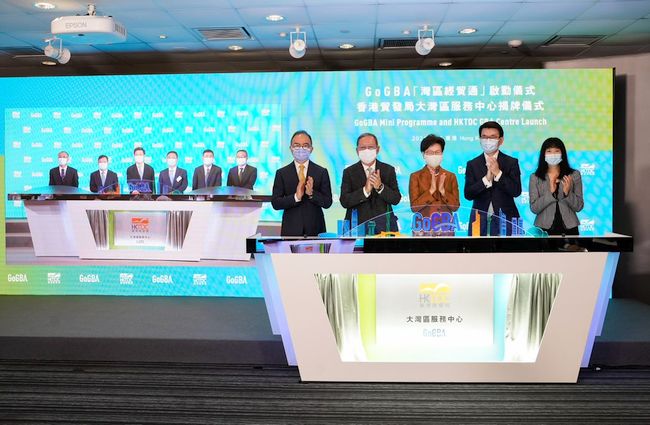

The GoGBA one-stop platform was launched at this morning's online ceremony in Hong Kong and Shenzhen. The officiating guests in Hong Kong included (from L) Erick Tsang, Secretary for Constitutional and Mainland Affairs of the HKSAR; Dr Peter K N Lam, Chairman of the HKTDC; Carrie Lam, Chief Executive of the HKSAR; Edward Yau, Secretary for Commerce and Economic Development of the HKSAR; and Margaret Fong, HKTDC Executive Director.

GoGBA WeChat mini programme (QR Code)


At today's launch event, which took place via a virtual link between Hong Kong and Shenzhen, Carrie Lam, Chief Executive of the Hong Kong Special Administrative Region (HKSAR), and Qin Weizhong, Deputy Secretary of Shenzhen Municipal Committee of the Communist Party of China and Mayor of Shenzhen Municipal People's Government, officially launched the GoGBA WeChat mini programme – a digital information and business tool – and the HKTDC GBA Centre located at the HKTDC's Shenzhen office. Several memorandums of understanding (MoUs) were also signed with the Leading Group Office of Guangdong on Construction of Guangdong-Hongkong-Macao Greater Bay Area, the China Council for the Promotion of International Trade Shenzhen Municipal Committee, the People's Government of Shenzhen Futian District and five cities and districts in the GBA (Qianhai in Shenzhen, Nansha in Guangzhou, Hengqin in Zhuhai, Dongguan and Zhongshan), to expand the network of support for Hong Kong companies. After the ceremony, two webinars were held where companies that are already operating successfully in the GBA shared their business insights on how to succeed in the region.

Dr Peter K N Lam, Chairman of the HKTDC, said: "The GBA offers huge opportunities for businesses from Hong Kong and around the world. Our GoGBA WeChat mini programme is a useful digital tool to complement our physical support centres in Hong Kong and Shenzhen, and other parts of the GBA through our partners. As more and more businesses look for prospects in the GBA, the HKTDC is here to help."

One-stop platform covers three major service areas

In line with the HKSAR Chief Executive's 2020 policy address, the GoGBA one-stop platform aims to help Hong Kong small and medium-sized enterprises (SMEs) tap into the GBA with three major support components:

1. Digital tool for cross-border business

The GoGBA digital platform, which consists of the GoGBA WeChat mini programme digital messaging platform, comes into service effective today. The GoGBA digital platform is run in collaboration with the government offices of Guangdong province and municipal governments in the GBA, providing important information on the region including updates on policies and subsidies, listings of related business and trade organisations, regional guides, and information on GBA government services and applications. It also offers practical tools such as weather forecasts, cross-border transportation information, interactive maps, details of public services, and income tax reminders. Media friends can scan the WeChat QR code included in this press release to download the GoGBA digital platform.

2. Advisory services and training

The HKTDC's Shenzhen office has set up the HKTDC GBA Centre to strengthen its support to SMEs interested in exploring the GBA market. Together with the HKTDC SME Centre in Hong Kong, the centres will organise a series of seminars and workshops, sharing sessions and advisory activities in group or individual formats, equipping companies with the practical knowledge and skillsets needed to succeed in the GBA.

The MoUs signed today will see the introduction of GoGBA Business Support Centres in Shenzhen (Qianhai), Guangzhou (Nansha), Zhuhai (Hengqin), Dongguan and Zhongshan. The HKTDC targets to introduce the centres in all nine mainland cities in the GBA, establishing a comprehensive support network that can connect companies with partners and consultants from across the GBA.

In addition, the HKTDC's Transformation Sandbox (T-box) programme will extend its services from Hong Kong to Shenzhen and other cities in the GBA. Together with the Digital Academy and E-Tailing Academy, the HKTDC will provide advisory workshops related to e-commerce and digital business as well as marketing solutions and other digital platforms.

3. HKTDC online and offline activities

The HKTDC has utilised various digital technologies to organise exhibitions and conferences, and will continue to plan and organise business missions and networking events by adopting a new "digital and physical" format for its major events and activities. It will also continue to enhance the hktdc.com Sourcing platform. The "Guangdong-Hong Kong Co-operation Week" will be held with the People's Government of Guangdong Province in December to promote Hong Kong products and services through flagship promotional events – SmartHK in Guangzhou and ChicHK in Shenzhen.

The HKTDC will continue its outreach efforts to help Hong Kong and overseas companies, and enterprises from other GBA cities, to establish connections, providing business matching sessions and advice on seeking business opportunities. The Council is currently planning to organise a wide range of activities in the mainland, including exhibitions and conferences, to help Hong Kong enterprises promote their products and services, explore business opportunities in GBA cities and gain practical experience at the same time.

GoGBA WeChat mini programme (QR Code) https://tinyurl.com/5pnps82r

HKTDC SME Centre
Tel: +852 1830 668
Fax: +852 3693 4938
E-mail: smecentre@hktdc.org
Address: Ground Level, Hong Kong Convention and Exhibition Centre, 1 Expo Drive, Wan Chai, Hong Kong

HKTDC GBA Centre
Tel: +86-0755-82280112
Fax: +86-0755-82280114
E-mail: shenzhen.office@hktdc.org
Address: Unit 2405-06, Jindi Centre, Shennan Road 2007, Futian District, Shenzhen

Hong Kong and overseas companies share key to success in GBA

Representatives from Hong Kong and overseas companies gathered at this morning's launch event to share their success stories in capturing opportunities in mainland GBA cities through Hong Kong. Sharing their experiences in two separate sessions were Yan Lau, General Manager of Dongguan Dailywin Watch; Tommy Cheng, Founder and CEO of MY Super eCommerce Company; Jason Choi, Founder of DimYeah Studio & EGGY; Dawn Chui, General Manager – Pacific Rim of ORCA Asia; Joe Wan, CEO of Tricor Hong Kong; and Jefrey Hironaka Santo, Managing Director for Asia of Mundial.

ORCA is a Canadian company specialising in technology solutions for the treatment of food waste. Dawn Chui, General Manager – Pacific Rim of ORCA, said the pandemic has accelerated awareness of the need for food waste treatment in Hong Kong, and that an increasing number of hotels, campuses and restaurants are interested in their solutions. She said the company is optimistic about the mainland market. "The National 14th Five-Year Plan mentioned the issue of food waste management so we see great potential in venturing into this market. Hong Kong is the perfect springboard to Mainland China, with its free flow of capital very beneficial to corporate finance and one of the factors that encouraged us to establish a Hong Kong branch."

Yan Lau, General Manager of Dongguan Dailywin Watch, said the company set up its factory in Dongguan in the 1980s. Now, its Hong Kong headquarters is responsible for import, export, accounting and auditing functions, while the design, manufacturing and sales activities are carried out in Dongguan. Mr Lau said the company has put a big effort into building its own brand and last year launched the SAGA Moon Mars series to celebrate the achievements of the mainland's aerospace industry along with Dailywin's own achievements. During the pandemic, the company has shifted the focus to its online business and domestic sales, adopting new strategies such as e-commerce livestreaming with influencers and deploying new e-commerce and social e-commerce retail models. These new strategies have proved beneficial in helping the company's expansion in the mainland market.

Photo download: https://bit.ly/3gbhI1G

About HKTDC

The Hong Kong Trade Development Council (HKTDC) is a statutory body established in 1966 to promote, assist and develop Hong Kong's trade. With 50 offices globally, including 13 in Mainland China, the HKTDC promotes Hong Kong as a two-way global investment and business hub. The HKTDC organises international exhibitions, conferences and business missions to create business opportunities for companies, particularly small and medium-sized enterprises (SMEs), in the mainland and international markets. The HKTDC also provides up-to-date market insights and product information via research reports and digital news channels. For more information, please visit: www.hktdc.com/aboutus. Follow us on Twitter @hktdc and LinkedIn.

Media enquiries:
HKTDC Communications & Public Affairs Department
Snowy Chan, Tel: +852 2584 4525, Email: snowy.sn.chan@hktdc.org
Angel Tang, Tel: +852 2584 4544, Email: angel.hc.tang@hktdc.org

Copyright 2021 ACN Newswire. All rights reserved. http://www.acnnewswire.com

United Front only way to end Philippines’ standoff

NEW DELHI, May 30, 2021 – (ACN Newswire) – Tension is mounting in the South China Sea with the Philippines refusing to withdraw vessels from Whitsun Reef. Some 220 Chinese vessels congregated in early March at Union Banks and Whitsun Reef, providing for the present standoff between China and the Philippines. The area involved in the present dispute is well within the 200-nautical mile exclusive economic zone (EEZ) of the Philippines. China wants to dominate the South China Sea because that would give Beijing a strategic advantage against Taiwan and Japan, before risking a conflict over the Senkaku. President Xi Jingping has always gone for an easy target that he believes can be achieved with minimal risk and costs. Recent media reports suggest that China has warned the United States that it will face defeat if the two superpowers go to war, testimony to what China thinks about its military might.

The threat to the US has come from China in response to the joint military exercise recently carried out by the US, Japan, Australia and France amidst tension in the East China Sea. The involvement of the People's Armed Forces Maritime Militia (PAFMM) of China in disputes along the maritime borders of the Philippines, Vietnam and Japan cannot be ruled out. This militia comprises mainly fishermen and coastal workers from China. In fact, due to early militia gains, China built 'fishing shelters' to protect their fishermen in the Spratly Islands. Despite these activities, the Chinese government headed by Chairman Xi has denied any link between PAFMM and China's military. China claims that they are fishermen. This enables the PRC to deny any involvement of the Chinese government in these maritime disputes.

Regarding the present deadlock in the South China Sea where the Chinese Maritime Militia is not ready to leave Whitsun Reef, Prof Carl Schuster of Hawaii Pacific University says that this poses a dilemma for the Philippines as the Chinese Maritime Militia is not doing anything to disturb the peace. Can the Philippines believe China and its militia? The Chinese militia may leave the spot temporarily and come back again. The Chinese Coast Guard does not escort them. Schuster believes that the Philippines have to keep a close eye on China's movement in the Whitsun Reef, particularly the Chinese Air Force. They don't have to fear until the Chinese Air Force becomes involved in the present stalemate. They need to watch every action of China and also send a message that they are watching.

Prof Schuster says that the President of the Philippines Rodrigo Duterte dislikes the United States and does not want a situation where he has to seek US help. In Schuster's opinion, the United States should not help the Philippines either. By now Duterte should have realized that China is worse than the United States. The Philippine President is upset over the fact that if the United States was there to protect the Philippines from China and Russia, then why did it involve itself in the internal politics of the Philippines at the time of the coup. So, President Duterte is stuck between an enemy he can not trust and a friend whom he does not like. He is in a difficult spot.

Schuster thinks that countries with interests in the South China Sea should come together and back their respective Coast Guard to end the present crisis. China, he says, goes for easy prey. Look back at 1996, when the Philippines stopped patrolling the area around Campones Island after the United States left. China took advantage of the situation and captured Campones Island after a 90-minute gun battle. The Philippines later said that they could not patrol the area due to bad weather, which could be a reality. Yet the Philippines' ships were old and they faced a Chinese fishing fleet with artillery and weapons. But it was too late, they had left it unoccupied, Schuster says. The Philippines took their eyes off the ball and paid for it.

On being asked how to end the present stalemate in the South China Sea, Prof Schuster says the United States does not have a position on the South China Sea, it is between the claimants. The United States' only aim is to handle China. The Philippines never approached the United States at an official level to change its position. Schuster is of the opinion that the US can't do anything directly to end the stalemate. What the United States can do is to back up the Philippines Coast Guard in the South China Sea. Once China comes to know about this understanding, it will be a different ball game altogether.

China is accustomed to moving in a vacuum. The situation will change completely if the American and Philippine Coast Guards would shadow the other's vessels. The only thing which stops an aggressor is the fear of defeat. In Schuster's view, more than the Philippines alone it will require a united effort by other countries affected by China's bullying in the region, and Vietnam, Japan and the United States are willing to help the Philippines. Duterte says he doesn't want to upset China, but when China bullies his countrymen, he gets very upset. China continues bullying the Philippine people because they know they can get away with it. The problem with Vietnam is larger. The Chinese will set up in Cambodia one day, which looking at the map, we see as a natural progression. This is going to expose Vietnam's entire western border.

The Philippines will need submarines to defend its interests in the South China Sea, which Schuster suggests can be provided by Japan. Schuster believes Japan will help the Philippines with submarines and air power. Japan has a big stake in this area as 40% of Japanese maritime trade passes through this area. If China stops Japanese ships from entering the South China Sea, it would take 11 additional days for Japanese cargo ships to reach their destinations. What prevented Russia during the Cold War was not only fear of the United States but fear of the United States together with the European alliance. Likewise today, these several nations together can keep China in check. Such is the highhandedness of China that when an international arbitration held the present Chinese occupation illegal, China simply refused to abide by the judgment. However, this development will go in favour of the Philippines as the international community is aware of its disputed nature.

Commenting on why China is more active in the South China Sea than the East China Sea, Schuster said that China places greater importance on the South China Sea because of its strategic location: the South China Sea is easier to dominate. The PAFMM base in Sanya is closer to the disputed territories in the South China Sea than the PAFMM base in Guangzhou is to the Senkaku, and the fleet must pass through Taiwan's waters. The East China Sea is not strategically located; the PRC's military bases and airfields are closer to the disputed territory in the South China Sea than they are to the US bases in Japan, and both US and Chinese bases are equidistant from Senkaku. Also, Japan's Coast Guard is stronger than those of Vietnam and the Philippines, so the PAFMM gets greater support in the South China Sea from the Chinese military establishment.

Traditional thought in the Chinese military believes in isolating the enemy and establishing an advantageous geopolitical and military superiority before engaging in war. But the best leader is the one who achieves victory without fighting. Schuster reminds that China has secured much of the South China Sea using the PAFMM to expand control without firing a shot. It has worked so far. However, doing that around the Senkaku Islands may prove to be difficult and expensive.

– Carl Schuster, commissioned Naval ROTC from the University of South Carolina in 1974, Captain Schuster served in a variety of U.S. and international posts at sea and ashore, Joint Staff Officer, Foreign Area Officer and Strategic Planner at his retirement in 1999. A widely published author with over 600 articles in print and on-call regional expert for CNN International, Prof Schuster has been teaching at Hawaii Pacific University since 2000.

– Interview by Sanjay Kumar, May 2021, New Delhi, India. Former MSN Chief Editor and New Media content strategist, 26 years handling print and online news media, 20 years in new media, has worked with major online media organizations including Times Internet, NDTV Convergence, HT Media Ltd and India Today Group, as well as Microsoft.

Copyright 2021 ACN Newswire. All rights reserved. http://www.acnnewswire.com

CropLife Asia Highlights how Plant Science is ‘Part of the Solution’ on Biodiversity Day

SINGAPORE, May 21, 2021 – (ACN Newswire) – In concert with the theme for this year's International Day for Biological Development (or Biodiversity Day), We're part of the solution, CropLife Asia and its members are commemorating the day by raising the necessity of a biologically-diverse planet in ensuring our sustainable future and highlighting that plant science industry is increasingly 'part of the solution' in supporting biodiversity.

At present, climate change, deforestation and human activity pose the greatest threats to biodiversity. This is particularly concerning as richness in biodiversity is key in supporting agricultural systems and food production. Innovations in plant science offer solutions that can help mitigate a number of these threats to biodiversity.

"The goals of ensuring food security and strengthening biodiversity are not mutually exclusive, and we can't afford to fail at either," said Dr. Siang Hee Tan, Executive Director of CropLife Asia. "With population continuing to grow in the region and globally, food productivity in Asia has to keep up to ensure an abundant supply of safe and nutritious food. At the same time, the sustainability of our food production practices is critically important to drive biodiversity conservation and preservation. When used responsibly, plant science innovations such as biotech seeds and crop protection tools help our farmers feed the world while also supporting a healthy, biodiverse plant – but they're only part of the larger solution needed. The plant science industry remains committed to working with all food value chain stakeholders towards protecting the rich biodiversity on which we all depend."

The use of biotechnology and crop protection products help reduce the need to convert natural habitats into farmland. Between 1996-2018, productivity gained through biotechnology saved 231 million hectares of land from ploughing and cultivation[1]. Forests and other natural habitats can also thrive when crop protection products such as pesticides are used to control invading plants or insects that threaten native species. Biotech crops paired with herbicides also enable conservation tillage where soil is left undisturbed thus allowing the natural biodiversity in the soil to flourish. The combined biological activity of the billions of organisms in the soil is important to crop nutrition and soil health. The crop stubble left in the field from conservation tillage improves habitat and food sources for insects, birds, and other animals. Biotech crops also help plants use water more efficiently. In the U.S, genetically modified cotton has helped reduce water usage by 50% over the last 20 years, leaving more water for nature.

Integrated Pest Management also known as IPM is a farming system of managing pests that is designed to be sustainable, protects biodiversity and also helps create wildlife habitats around farms.

By utilizing both plant science innovations and IPM, farmers not only grow more on existing farmed land but also minimize the need to expand into more biodiverse areas, preserving these lands for the benefit of future generations.

[1] International Service for the Acquisition of Agri-Biotech Applications (ISAAA) Brief 55: Global Status of Commercialized Biotech/GM Crops in 2019

About CropLife Asia

CropLife Asia is a non-profit society and the regional organization of CropLife International, the voice of the global plant science industry. We advocate a safe, secure food supply, and our vision is food security enabled by innovative agriculture. CropLife Asia supports the work of 15 member associations across the continent and is led by six member companies at the forefront of crop protection, seeds and/or biotechnology research and development. For more information, visit us at www.croplifeasia.org.

For more information please contact:
Duke Hipp
Director, Public Affairs
CropLife Asia
Tel: +65 6221 1615
duke.hipp@croplifeasia.org

Copyright 2021 ACN Newswire. All rights reserved. http://www.acnnewswire.com
CropLife Asia Highlights how Plant Science is ‘Part of the Solution’ on Biodiversity Day

SINGAPORE, May 21, 2021 – (ACN Newswire) – In concert with the theme for this year's International Day for Biological Development (or Biodiversity Day), We're part of the solution, CropLife Asia and its members are commemorating the day by raising the necessity of a biologically-diverse planet in ensuring our sustainable future and highlighting that plant science industry is increasingly 'part of the solution' in supporting biodiversity.

At present, climate change, deforestation and human activity pose the greatest threats to biodiversity. This is particularly concerning as richness in biodiversity is key in supporting agricultural systems and food production. Innovations in plant science offer solutions that can help mitigate a number of these threats to biodiversity.

"The goals of ensuring food security and strengthening biodiversity are not mutually exclusive, and we can't afford to fail at either," said Dr. Siang Hee Tan, Executive Director of CropLife Asia. "With population continuing to grow in the region and globally, food productivity in Asia has to keep up to ensure an abundant supply of safe and nutritious food. At the same time, the sustainability of our food production practices is critically important to drive biodiversity conservation and preservation. When used responsibly, plant science innovations such as biotech seeds and crop protection tools help our farmers feed the world while also supporting a healthy, biodiverse plant – but they're only part of the larger solution needed. The plant science industry remains committed to working with all food value chain stakeholders towards protecting the rich biodiversity on which we all depend."

The use of biotechnology and crop protection products help reduce the need to convert natural habitats into farmland. Between 1996-2018, productivity gained through biotechnology saved 231 million hectares of land from ploughing and cultivation[1]. Forests and other natural habitats can also thrive when crop protection products such as pesticides are used to control invading plants or insects that threaten native species. Biotech crops paired with herbicides also enable conservation tillage where soil is left undisturbed thus allowing the natural biodiversity in the soil to flourish. The combined biological activity of the billions of organisms in the soil is important to crop nutrition and soil health. The crop stubble left in the field from conservation tillage improves habitat and food sources for insects, birds, and other animals. Biotech crops also help plants use water more efficiently. In the U.S, genetically modified cotton has helped reduce water usage by 50% over the last 20 years, leaving more water for nature.

Integrated Pest Management also known as IPM is a farming system of managing pests that is designed to be sustainable, protects biodiversity and also helps create wildlife habitats around farms.

By utilizing both plant science innovations and IPM, farmers not only grow more on existing farmed land but also minimize the need to expand into more biodiverse areas, preserving these lands for the benefit of future generations.

[1] International Service for the Acquisition of Agri-Biotech Applications (ISAAA) Brief 55: Global Status of Commercialized Biotech/GM Crops in 2019

About CropLife Asia

CropLife Asia is a non-profit society and the regional organization of CropLife International, the voice of the global plant science industry. We advocate a safe, secure food supply, and our vision is food security enabled by innovative agriculture. CropLife Asia supports the work of 15 member associations across the continent and is led by six member companies at the forefront of crop protection, seeds and/or biotechnology research and development. For more information, visit us at www.croplifeasia.org.

For more information please contact:
Duke Hipp
Director, Public Affairs
CropLife Asia
Tel: +65 6221 1615
duke.hipp@croplifeasia.org

Copyright 2021 ACN Newswire. All rights reserved. http://www.acnnewswire.com

A New Route for Chengdu to Develop its AI Industry

CHENGDU, CHINA, Apr 30, 2021 – (ACN Newswire) – In February 2020, the Ministry of Industry and Information Technology of the People's Republic of China (MIIT) issued its support to the establishment of National Artificial Intelligence (AI) Innovation and Application Pilot Zones in Beijing, Tianjin (Binhai New Area), Hangzhou, Guangzhou, and Chengdu. This is the second batch of pilot zones announced by the MIIT. So far, the number of China's AI innovation and application pilot zones has increased to 8, while Chengdu has become the first AI innovation and application pilot zone in West China.

When we talked about the AI industry in Chengdu, the one thing we must know is Chengdu Science City. It is the core of the next-gen AI industry ecosystem in Chengdu. Chengdu promotes innovative development and high-quality development through new economy.

Attracting Top Enterprises

Now, a number of enterprises have established an industrial cluster with Chengdu Science City as the core, contributing to the AI industry.

With over 90 key enterprises in the ecosystem, the cluster has greatly contributed to the local transformation of AI technology. The ecosystem has also attracted many university project teams, including the Sichuan Energy Internet Research Institute of Tsinghua University and Chengdu Innovation Research Institute of Beihang University, which have created ideal conditions for the integration of AI production and research.

In the wave of the digital economy, this ecosystem focuses on the development of AI industry, and it initially gathers companies from the whole supply chain. Gradually, Chengdu builds a complete industrial ecosystem and helps it become the "fourth city of AI."

Attraction and Cultivation of AI Projects

The development of an industry cannot be separated from the support of policy. Since the MIIT started the support to the National Artificial Intelligence (AI) Innovation and Application Pilot Zone in 2019, Chengdu has been actively putting it into practice. At present, relevant policies have been enacted to create a positive development environment for the industry.

These policies include two parts: First, introduce strongly targeted industrial support policies. Second, provide rich application scenarios for AI enterprises and attract AI enterprises.

In addition, the ecological environment is processing. First, optimize the enterprise service system. Second, promote the implementation of policies; Third, build an efficient communication platform.

Build Industrial Area

In terms of AI infrastructure construction, Chengdu has built industrial parks and facilities, such as the "Supercomputing Center" and the New Economy Industrial Park, to accelerate the implementation of the digital economy.

The Chengdu Supercomputing Center, with a maximum computing speed of 100 million billion calculations per second, started trial operation in September 2020. It has cooperated with more than 200 institutions and completed 1.52 million scientific research projects. The CPU utilization rate has reached 30%.

Huawei Kunpeng Industrial Ecosystem Base and Tianfu High-Performance Computing Public Technology Service Platform, and many other innovation platforms started operation, serving more than 400 enterprises and driving the development of the AI industry in Tianfu New Area.

The Unicorn Island, the Science and Technology Innovation Park, the Overseas High-level Talents Innovation Park, the Smart Port, and other core industrial carriers will create a favorable environment for the development of the AI industry. Zones A, B, C, and D of the New Economy Industrial Park have been put into use with about 6,000 employees.

Synergistic Development in Tianfu New Area

Digital economy industries such as AI and big data are frequently mentioned in China's 14th Five-Year Plan (2021-2025), which was released last month. 36KR Sichuan learned that in the first year of the 14th Five-Year Plan, Tianfu New Area New Economy Bureau will also launch a series of policies spurring the AI industry:

First, increase the number of innovation sources, deepen the construction of a "1+3+N" innovation system led by the Comprehensive National Science Center, with laboratories in three major fields as the core, and supported by a number of major scientific and technological infrastructure and research platforms.

Second, improve the business patterns for science and technology. Chengdu will introduce well-known service agencies from both China and overseas, accelerating the operation of Tianfu International Technology Transfer Center and build an innovation platform for the advanced computing industry based on the Chengdu Supercomputing Center.

Third, improve the ecology of the digital economy. Chengdu will accelerate the settlement of a number of leading enterprises, start the construction of a number of major projects, and spare no effort to promote the completion of provincial and municipal key projects such as M&S Electronics and put them into operation.

Fourth, optimize city management and industrial promotion. On the principle of "preferential in industry, composite in functions, intensified in space, and suitable for both living and business," the construction of the first zone of Fengqigu Digital Economy Industrial Park will start within the year.

As the AI industry has become the core driving force for the new scientific and technological revolution and industrial transformation, Chengdu regards the AI industry as an important way to transform economic development. Hence, it promotes Chengdu to become the industrial highland of China's new economy.

Media Contact
Chenxi Zhang, 36Kr
E-mail: zhangchenxi@36kr.com

Copyright 2021 ACN Newswire. All rights reserved. http://www.acnnewswire.com

Diplomatic Posturing and the Power Game in Southeast Asia

Srinagar, Jammu and Kashmir, INDIA, Apr 26, 2021 – (ACN Newswire) – Dr Stephen R Nagy, in a recent interview by Mr Nadir Ali, Director of the Centre for Peace and Justice (JKCPJ), responded to the rising tensions in Southeast Asia and spoke of mitigating the cascading issue of asymmetry of power and economy in the region. In his opinion, the world is once again experiencing a great power competition, a competition that could cascade into conflict and catastrophe. Terrestrial land disputes have expanded to the maritime domain, with China having disputes with states in Southeast Asia, India, and Japan. Chinese efforts to dominate Southeast Asian Politics and redistribute power is placing the region into the position of trying to balance regional security interests and national security interests. China is effectively using its asymmetric economic relations with its neighbours to achieve its strategic security objectives which focus on territorial control and political deference by neighbours.

In response to the question of China's domestic legislation and its invention of historic claims and their role in China's foreign policy, Dr Nagy answered that with China's re-emergence as the dominant economy in the region, China has widened its claims on features in the South China Sea and islands in the East China Sea, many through domestic legislation and the invention of historic claims as tools to achieve foreign policy objectives. The effectiveness of domestic legislation by China in terms of securing its claims in the South China Sea and East China Sea is however debatable. Many such claims are not recognized by international bodies and courts such as the Permanent Court of Arbitration. One such claim in the South China Sea was ruled not legal by the Permanent Court of Arbitration in July 2016, in a case drawn upon by the Philippines.

China is using domestic legislation to expand its exclusive economic zones by creating municipalities at the edge of the South China Sea which gives a legal foundation to the exclusive economic zones. The impact of China's legislation is however small. A parallel can be drawn comparing control through domestic legislation between the Chinese claims in the South China Sea and the Japanese controlled Senkaku Islands. Japan has controlled the Senkaku Islands for over a century and there is continuity in that control via coast guard and environmental management, mostly and mainly through domestic legislation and international partnership; no such continuity of control with regard to the Chinese claim exists on the ground in the South China Sea.

The invention of historic claims by China as a tool for foreign policy is even more debatable and problematic. To analyze this, one must turn back the pages of history and search for signs of claims of sovereignty by China over the island territories in the South China Sea; no such claim can be found. Bill Hayton in his book "Invention of China", writes in detail how during the Ching (Qing) Dynasty, China showed no interest in the island formations in the South China Sea, whether the islands neighbouring Indonesia, Vietnam or the Philippines. China in the past has never set any claim of any of the island territories and thus the invention of historic claim is not only debatable but problematic as well. The UNCLOS treaty signed by 117 states which sets the 200-mile limit for Exclusive Economic Zones gives these countries a claim over the island formations in the South China Sea. UNCLOS however is not ratified by the US, which gives it a loose footing to enforce any such claims on China. This is despite the US conducting operations within the scope of the law.

Dr Nagy briefly touched on the role of ASEAN (Association of Southeast Asian Nations) and individual cooperation in establishing regional stability, and in his viewpoint, ASEAN could play a significant role in resolving territorial issues in Southeast Asia, but it is a loose association of nations and doesn't have the legal capacity to challenge and enforce its decisions on China. Hitherto, it has till now not played any decisive role. At the 2014 ASEAN Summit, a consensus was developed for a joint statement with regard to territorial disputes, however, Cambodia succumbed to influence from China, making a joint statement impossible. This fracturing of ASEAN unity and division of opinion is mainly achieved through aid and pledges to promote development; an example of how China uses its economic influence to shape the behaviour of neighbouring states.

With most of the ASEAN states not claimants in the SCS disputes, China has a free hand in manipulating the decision-making capability of ASEAN. The ASEAN members hold mixed views about China; some members perceive China as an economic opportunity and think that China is critical for the development of ASEAN member states, while others see China as a state having dominating and hegemonic interests in the region, thus the relationship of China and ASEAN will always be important but challenging. The main problem is the power asymmetry between China and the Southeast Asian nations. These nations seek strategic autonomy to resolve the South China Sea issues peacefully and effectively. The pattern we are seeing, at an individual level, is to bring an extra-regional power to the region to enhance the human capital and other capabilities so that they can push back unilaterally against some of the more assertive behaviour of China. This becomes more important for ensuring that the economic, political and national security interests of smaller nations are met and secured.

Dr Nagy then addressed the need to establish and maintain partnerships and the formation of Quad-like groups in restoring stability and balance in Southeast Asia and particularly the South China Sea, as Japan has been the most active in establishing strategic partnerships, by providing coast guard vessels, maritime domain awareness, and human capital to support individual members and enhance ASEAN's integration. Japan's role is even more important when it comes to the Chinese maritime militia (fishermen boat strategy), whereby the militia tries to instigate escalations that allow China to build an image seen as being defensive. The militia is used to build pressure on the states and in the case of the Philippines, China has already occupied some features in the South China Sea using these militia forces. The militia moves in and out of sovereign national waters, where every movement is planned in building a Lawfare strategy, as in the case of the Senkaku islands.

The US needs to designate a dedicated naval fleet for the South China Sea, so it has a constant presence 365 days a year. This would limit the influence of China in the region, restore the symmetry of trade relations to some extent and stop the undue exploitation of smaller states by the People's Republic of China. Naval cooperation and joint exercises in the South China Sea challenge China in particular when French and Canadian navies are involved. Quad and Quad-plus like cooperation is the way forward, however, this could lead to catastrophe if maritime management systems and communications channels are not established. China has to adjust to the presence of an extra-regional power in the South China Sea, and the US and allies have to work to keep China's assertive behaviour at bay while avoiding accidental conflict.

– Dr Stephen R Nagy is a Senior Associate Professor at the Department of Politics and International Studies, International Christian University, Tokyo. He is a Distinguished Fellow at the Asia Pacific Foundation (APF) in Canada, a Fellow at the Canadian Global Affairs Institute, and a Visiting Fellow at the Japan Institute for International Affairs (JIIA). He is currently working on 'Chinese Perceptions of Japan's Foreign Policy under PM Abe since 2012', and 'Middle Power Cooperation in the Indo-Pacific'. Follow Stephen on Twitter @nagystephen1.

– Nadir Ali Wani is currently Director of the Center for Peace and Justice, a research-based group in Srinagar, the capital of Jammu and Kashmir, India. He holds a Masters�s degree in Conflict Studies and International Relations from Jawahar Lal Nehru University, New Delhi, and has an abiding interest in the study of conflicts in South Asia with a particular interest in international politics to do with China, Islam and Kashmir.

– Jammu and Kashmir Centre for Peace and Justice (JKCPJ) is a youth-oriented, independent, multidisciplinary research organization. The Centre came into being in 2018, against the backdrop of global challenges upholding peace and social justice. The driving concern of the JKCPJ is bringing people together to accomplish things in an environment of trust, to strive for sustainable peace. Our mechanism transmits knowledge, hope, hard work, and successfully contributing to the development of humankind. Please visit https://jkcpj.org.

Copyright 2021 ACN Newswire. All rights reserved. http://www.acnnewswire.com