Indonesian peace mission on Russia-Ukraine conflict

JAKARTA, Jul 3, 2022 – (ACN Newswire) – President Joko Widodo has accomplished his visits to Ukraine and Russia on Thursday evening (June 30) to invite both countries to build dialogue, stop the war, and build peace.
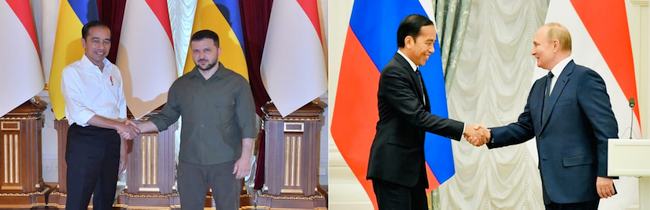

President Joko Widodo has visited Kyiv, Ukraine, for a peace mission. (Laily Rachev – Biro Pers Sekretariat Presiden)


President started his mission by visiting Kiev, Ukraine. At the Maryinsky Palace, Kyiv, Jokowi was greeted by Ukrainian President Volodymyr Zelenskyy on Wednesday afternoon (June 29).

For Ukraine, that day was a historic day, as President Jokowi's visit was the first one to be made by an Asian leader since the start of the Russian invasion of Ukraine.

Jokowi, during a joint press statement with Zelenskyy, conveyed several important points from his visit to Ukraine.

"I conveyed to President Zelenskyy that I made this visit as a manifestation of Indonesia's concern for the situation in Ukraine," he remarked.

He reiterated the invitation to Zelenskyy to attend the G20 Summit in November 2022 in Bali.

Jokowi also emphasized Indonesia's principled position regarding the importance of respect for sovereignty and territory.

"Although it is still very difficult to achieve, I still convey the importance of a peaceful settlement, and the spirit of peace must never fade," he affirmed.

Indonesia will strive to contribute through assistance, including medicines, and remain committed to reconstructing one of the hospitals around Kiev.

To this end, President Jokowi offered to carry a message from President Zelenskyy to President Putin.

On the other hand, President Zelenskyy praised Jokowi's visit because Indonesia hosts the G20 Presidency this year and is the strongest country in ASEAN.

Zelenskyy expressed optimism that it would strengthen the effort to end the war.

After visiting Kiev, President Jokowi also made a visit to Moscow, Russia and meet Russian President Vladimir Putin.

During the visit, Jokowi emphasized the issue of peace and humanity has always been a priority for Indonesia.

"The Indonesian Constitution mandates Indonesia to always try to contribute to the creation of world peace. In this context, I made visits to Kiev and Moscow," he stated.

He also emphasized that food and fertilizers were humanitarian issues and were of interest to the world community. Thus hundreds of millions of people affected by disruptions, especially in developing countries.

Hence, Jokowi lauded Putin's guarantee for the security of food and fertilizer supplies.

Jokowi stressed that Indonesia has no interest apart from helping resolve the war between Russia and Ukraine.

"I invite all world leaders to work together to revive the spirit of multilateralism, the spirit of peace, and the spirit of cooperation," President Jokowi stated.

Meanwhile, Putin noted that Indonesia is one of their key partners in the Asia-Pacific region.

"Russian-Indonesian relations are constructive and mutually beneficial, developing steadily on the basis of long-standing good traditions of friendship and mutual assistance," he said.

During the joint press conference, President Jokowi reiterates the importance of the spirit of peace.

With President Jokowi's visit to Ukraine and Russia for a peaceful mission, hopes are pinned high on the war ending soon and the food crisis being mitigated quickly.

Written by: Katriana, Editor: Rahmad Nasution (c) ANTARA 2022

Copyright 2022 ACN Newswire. All rights reserved. http://www.acnnewswire.com
Indonesian calls, messages at G7 Summit

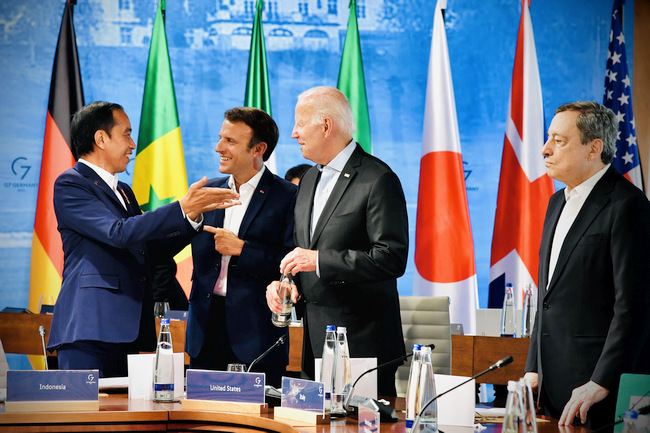
JAKARTA, Jun 30, 2022 – (ACN Newswire) – Indonesian President Joko Widodo (Jokowi) has arrived at the venue of the 48th G7 Summit in Schloss Elmau, Germany on Monday afternoon (June 27) local time (UTC+1) to attend the meeting in the capacity of a partner country and as the G20 President.


Indonesian President Joko Widodo in conversation with French President Emmanuel Macron and United States President Joe Biden while attending the G7 Summit in Elmau, Germany, Monday, June 27, 2022. ANTARA/HO-Press Bureau of the Presidential Secretariat/Laily Rachev/aa/ak. (Handout of Press Bureau of the Presidential Secretariat/Laily R)


The G7 is an informal forum bringing together leaders of the world's leading industrial nations from the European Union and countries such as Canada, France, Germany, Italy, Japan, the United Kingdom, and the United States.

Jokowi was welcomed by German Chancellor Olaf Scholz.

During the official welcoming session by the chancellor, Jokowi was present with the leaders of G7 partner countries, including Argentine President Alberto Fernandez, Indian Prime Minister Narendra Modi, Senegalese President Macky Sall, and South African President Cyril Ramaphosa.

Furthermore, during the photo session, he posed for a picture accompanied by the German chancellor and United States President Joe Biden.

All heads of government attended two sessions of the G7 meeting.

President Jokowi invited G7 countries to contribute to capitalizing on investment opportunities in the clean energy sector in Indonesia.

President Jokowi conveyed the statement while attending the G7 Summit working lunch session based on the topics of climate change, energy, and health in Elmau, Germany, Monday (June 27).

"(This is) especially (regarding) investment opportunities in the clean energy sector in Indonesia, including the development of an electric car and lithium battery ecosystem," the president stated.

According to President Jokowi, Indonesia's potential, as a contributor to clean energy, whether in the bowels of the earth, on land, or at sea, is very large. Indonesia needs large investments and low-carbon technologies to support a fast and effective transition to clean energy.

"Indonesia needs at least US$25-30 billion for energy transition in the next eight years. We can optimize this transition as a motor of economic growth, open up business opportunities, and create new jobs," President Jokowi stated.

Furthermore, the president noted that in Indonesia as well as in other developing countries, the risk of climate change is very real, especially since it is an archipelagic country, with 17 thousand islands. The risks are not only detrimental to health but also put farmers and fishermen in trouble.

"We really hope for the support of all G7 countries in the Indonesian Presidency at the G20. See you in Bali. Thank you," the president stated.

During session II of the G7 summit on the topics of food security and gender equality, President Jokowi called on G7 and G20 countries to jointly overcome the food crisis that currently threatens people in developing countries to fall into extreme hunger and poverty.

"(Some) 323 million people in 2022, according to the World Food Programme, are at risk of facing acute food insecurity. The G7 and G20 have a big responsibility to overcome this food crisis. Let us fulfill our responsibilities now and from now on," President Jokowi affirmed.

According to the president, food is the most basic human rights issue. Indubitably, women from poor families suffer the most from food shortages for their children and families.

"We must act quickly to find a concrete solution. Food production must be increased. The global food and fertilizer supply chain must return to normal," the president stated.

In his speech, President Jokowi emphasized the importance of G7 countries' support for the reintegration of Ukraine's wheat exports and Russia's exports of food and fertilizer commodities in global supply chains.

There are two ways to realize this, with the first being the facilitation of Ukraine's grain exports that can begin immediately.

According to the president, the second approach is proactive communication with the public worldwide that food and fertilizer commodities from Russia are not subject to sanctions.

"This intensive communication is very necessary, so that there is no prolonged doubt in the (minds of the) international public. This intensive communication also needs to be strengthened with communication with related parties, such as banks, insurance, shipping, and others," the president explained.

President Jokowi had paid significant attention to the impact of the war on food and fertilizer supply chains.

"(This is) especially for fertilizers, because if we fail to handle it, then a rice crisis involving two billion people, especially in developing countries, can occur," the president cautioned.

At the end of his remarks, the president again called for the importance of the G7 and G20 countries to jointly overcome this food crisis while also inviting G7 leaders to attend the G20 Summit in Bali.

"I am waiting for the G7 leaders to attend the G20 summit. See you in Bali, on November 15-16, 2022," President Jokowi stated.

Meanwhile, Minister of Foreign Affairs Retno Marsudi noted that the president held about nine bilateral meetings with: the Prime Minister of India; French President; Prime Minister of Canada; Chancellor of Germany; British Prime Minister; Prime Minister of Japan; President of the European Commission; President of the Council of Europe; and the Managing Director of the IMF.

During the bilateral meetings, besides inviting other countries to solve the problems of the food supply chain, president Jokowi also highlighted the preparations for the G20 Summit.

"In these meetings, we can clearly see that support for the Indonesian Presidency is still very strong," Marsudi noted.

In 2022, Germany takes over the G7 Presidency and hosts the 48th G7 summit held on June 26-28, 2022, in Schloss Elmau.

The G7, originally G8, was set up in 1975.

The annual G7 summits have, over the years, developed into a platform for determining the course of multilateral discourse and shaping political responses to global challenges.

Written by: Azis Kurmala, Editor: Fardah Assegaf (c) ANTARA 2022

Copyright 2022 ACN Newswire. All rights reserved. http://www.acnnewswire.com

G20 committed to financing better pandemic response

JAKARTA, Jun 22, 2022 – (ACN Newswire) – The G20 members and several relevant international organizations agreed to work together to create the Financial Intermediary Fund (FIF) to help countries in need to face any pandemic in the future.


Indonesian Health Minister Budi Gunadi Sadikin (L) and Indonesian Finance Minister Sri Mulyani (R) at the first G20 Joint Finance and Health Ministerial Meeting held in Yogyakarta, 21 June. (ANTARA/AstridFaidlatulHabibah)


During the 1st G20 Joint Finance and Health Ministerial Meeting held in Yogyakarta on Tuesday, Indonesian Finance Minister Sri Mulyani emphasized the urgency for collaborative work between health and finance sectors to better prepared for future pandemics, considering that the COVID-19 would not be the last.

"The world is definitely watching us – how the G20 is going to respond with delivering concrete action in pandemic preparedness and response. The world is waiting for us," Mulyani remarked.

Furthermore, she also asserted the importance of inclusivity in the work of FIF, led together by the World Health Organization (WHO) and the World Bank, which required the involvement of both developed and developing countries.

"Only then, we can be effective in preparing to tackle the next global pandemic together," Mulyani stated.

"I would like to acknowledge the central role of the WHO in fighting pandemic and the importance of including the voice of developing countries in our institutional arrangement to create the most effective system for pandemic preparedness and response," she added.

The WHO and the World Bank estimated that US$31 billion is required annually for strengthening global health security, according to WHO Director General Tedros Adhanom Ghebreyesus.

About two-third of that fund could come from existing resources but that leaves a gap of US$10 billion per year. Hence, he expects that the FIF would help close that gap.

WHO and the World Bank have been cooperating to establish the FIF, which would be overseen by a board that takes a decision on funding allocation supported by a technical advisory panel.

Both the board and the technical advisory panel would be supported by the joint WHO-WB secretariat based at the Bank's headquarters in Washington, with assisting staff from the WHO.

According to the plan, the Bank will provide financial and administrative leadership at the secretariat, operate as a representative for the FIF, hold and transfer relief funds, as well as provide administrative services.

Meanwhile, the WHO will provide technical leadership; coordinate input for the technical advisory panel; and prepare relevant technical documentation, recommendations, and reports for the council.

Both the World Bank and WHO will act as implementing entities, along with other global health partners with relevant expertise, including the Global Fund, the Global Alliance for Vaccines and Immunization (GAVI), and the Coalition for Epidemic Preparedness Innovations (CEPI).

"We look forward to your active participation in building and financing a FIF that is inclusive, equitable, and effective in making our world safer from pandemics," Tedros noted.

To date, the G20 has pushed for an emergency fundraising commitment of around US$1.1 billion from five member countries and one international social organization to mobilize the role of FIF.

The pledges came from the United States, the European Union, Germany, Indonesia, Singapore, and the Wellcome Trust.

Additionally, Indonesian Health Minister Budi Gunadi Sadikin stated the meeting was not only focusing on the FIF as the source of funds to face future pandemics, but the world must also think about the uses of funds.

"Because money is (only) half the solution for the health crisis. We need to translate this money into access to vaccines, medicines, and diagnostic tools," he said at a press conference after the joint ministerial meeting.

In order to create such access, he explained, the engagement with private sectors as the producers of vaccines, therapeutics, and diagnostics was crucial.

"We need to talk to them, to engage with them. How can they maintain a certain volume commitment? How then we will be able to distribute equally and very quickly if the next pandemic happens?" he noted.

The establishment of FIF is still in the ongoing discussion that will be continued at the next G20 meetings, hosted this year by Indonesia.

However, as the G20 President, Indonesia will continue to gather as much as possible support from more countries as well as an international organization even philanthropists, in order for them to be able to contribute to the financing side of pandemic preparedness and response.

Written by: Yashinta Difa Pramudyani, Editor: Fardah Assegaf (c) ANTARA 2022

Copyright 2022 ACN Newswire. All rights reserved. http://www.acnnewswire.com

Director-General of Investment Promotion visits Middle East and Europe to promote Hong Kong’s long-term business opportunities

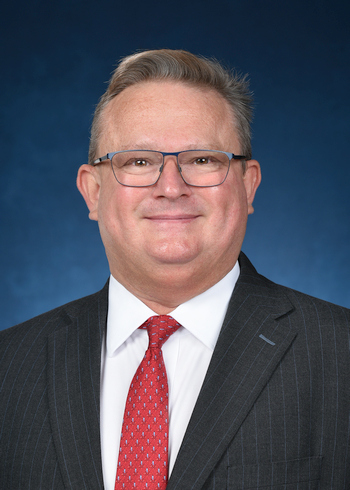
HONG KONG, May 29, 2022 – (ACN Newswire) – The Director-General of Investment Promotion, Mr Stephen Phillips, today (May 29) started his duty visit to Doha, Abu Dhabi, Dubai and Kuwait in the Middle East, and Amsterdam, Lisbon and Madrid in Europe as part of the latest efforts of Invest Hong Kong (InvestHK) to promote Hong Kong's business attractions.


Mr Stephen Phillips


During the visit, Mr Phillips will meet with business leaders from various sectors including innovation and technology, financial services and family offices, fintech, business and professional services, tourism and hospitality, and transport, infrastructure and advanced manufacturing. He will also speak at three events in Abu Dhabi, Lisbon and Madrid, giving updates on Hong Kong's latest business environment and opportunities, highlighting the city's strategic role in the Guangdong-Hong Kong-Macao Greater Bay Area (GBA).

Mr Phillips said, "Hong Kong is an ideal location for overseas and Mainland companies, as well as entrepreneurs from around the world, as a base to set up or expand their business in Hong Kong, the GBA, China, and Asia more widely. The facts speak for themselves: in two surveys conducted last year, we saw a record number of businesses from overseas and the Mainland come to Hong Kong, as well as the largest number of start-ups in Hong Kong."

He added, "Hong Kong offers to companies a wide range of routes to growth opportunities. I look forward to sharing with representatives of companies and entrepreneurs the up-to-date and real situation in Hong Kong, and particularly how they can use Hong Kong to seize opportunities, including those arising from the GBA."

About InvestHK

InvestHK is the department of the Hong Kong Special Administrative Region Government responsible for attracting foreign direct investment and supporting overseas and Mainland businesses to set up or expand in Hong Kong. It provides free advice and customised services for overseas and Mainland companies. For more information, please visit www.investhk.gov.hk.

Copyright 2022 ACN Newswire. All rights reserved. http://www.acnnewswire.com

GPDRR: Indonesia offers sustainable resilience to tackle disaster risk

Nusa Dua, Bali, May 27, 2022 – (ACN Newswire) – At the 2022 Global Platform for Disaster Risk Reduction (GPDRR) event, the Government of Indonesia offered the world the concept of sustainable resilience as a solution to address the challenges of systemic disaster risk.


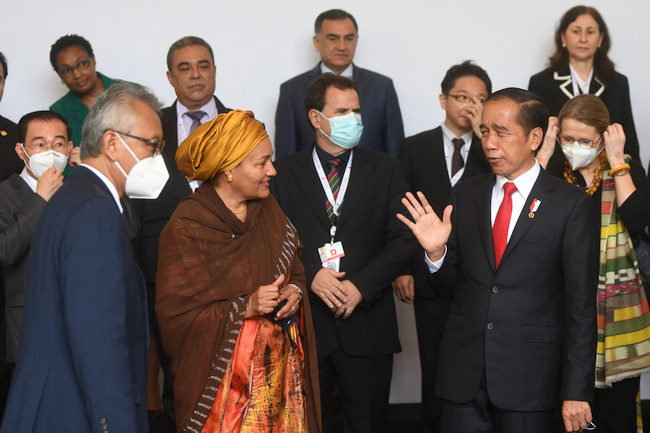
President Joko Widodo (R) discusses with UN Deputy Secretary-General Amina Mohammed (L) before the opening ceremony of the Global Platform for Disaster Risk Reduction 2022 in Nusa Dua, Bali, Wednesday. (ANTARA FOTO/Akbar Nugroho Gumay/foc)


Indonesian President Joko Widodo highlighted this concept at the opening ceremony of the 2022 GPDRR in Nusa Dua, here, on Wednesday.

The sustainable resilience concept is considered to be a solution to tackle all forms of disasters, including facing a pandemic and concurrently supporting the implementation of the Sustainable Development Goals (SDGs), Jokowi remarked.

He highlighted the need to apply several measures to build sustainable resilience.

"First, we should strengthen an anticipatory, responsive, and adaptive disaster preparedness culture as well as institutions in dealing with disasters," President Jokowi stated.

According to the president, disaster mitigation education and government institutions that are synergistic and responsive to disasters must become a shared priority.

Jokowi explained that the second measure deemed necessary is for every country to invest in science, innovation, and technology, including in ensuring access to finance and technology transfer.

"Access to funding is an important issue that we must take seriously. Indonesia has developed a strategy for funding and disaster insurance by establishing a pooling fund and using development funds at local levels to support disaster mitigation and preparedness," he stated.

The third measure is by building infrastructure that is resilient to disasters and climate change.

"(This is) in addition to mitigating (the impacts on) physical infrastructure, such as dams, breakwaters, reservoirs, and embankments; green infrastructure, such as mangrove forests, shrimp seedlings on the coast; … as well as the development of open spaces to be part of the realization of infrastructure development," Jokowi pointed out.

"The protection of vulnerable groups living in high disaster risk areas must also get special attention," he stressed.

Lastly, the Indonesian president invited all countries to commit to implementing global agreements at the national and local levels.

"The Sendai Framework, the Paris Agreement, and the SDGs are important international agreements in the efforts to reduce disaster risk and climate change. I invite all countries to be committed and serious about implementing it," Jokowi stated.

He affirmed that disaster risk reduction is an effective investment to prevent future losses.

"To that end, we affirm Indonesia's commitment to implementing the Sendai Framework as well as other international commitments," he stressed.

The head of state also expressed Indonesia's readiness to share experiences and knowledge in disaster mitigation.

"As a disaster-prone country, Indonesia has accumulated knowledge and experience that can be an important lesson for the world, but Indonesia is also eager to learn from international experience," Jokowo emphasized.

"Let's work together to mitigate (impacts and manage risks with regard to) the rise in disasters for a better life today and tomorrow," he concluded.

Appreciation

On the occasion, several United Nations (UN) officials — President of the 76th Session of the UN General Assembly Abdulla Shahid, UN Deputy Secretary General Amina Mohammed, and Special Representative of the UN Secretary General for Disaster Risk Reduction Mami Mizutori — lauded Indonesia for being successful in controlling COVID-19, so that the 2022 GPDRR forum could be held in-person in Nusa Dua, Bali.

"I would like to convey the appreciation of the UN to the president of Indonesia and the people for hosting the 2022 GPDRR," Mohammed stated at the opening ceremony.

"I would like to congratulate and appreciate Indonesia for the measures that have been taken to address COVID (as a) response that had allowed us to meet in this conference here in-person," she stated.

According to the UN deputy secretary general, Indonesia's efforts to vaccinate its population of 217 million people is a major achievement.

"We applaud the leader of Indonesia for its vaccine program for keeping everyone safe and reacting and responding to the COVID pandemic," she stated.

She also affirmed that Indonesia is a critical partner that has taught the world a lot about disaster risk reduction.

"Your willingness to host this important gathering is a testament to the leading role that you (Indonesia) play in sustaining development and climate action," she remarked.

Meanwhile, the United Nations Office for Disaster Risk Reduction (UNDRR) Director Ricardo Mena lauded Indonesia as a country that is leading in the global efforts for disaster risk reduction.

"This is a very important (effort), and I think this is where we think that Indonesia is leading in terms of the global efforts to reduce disaster risks," Ricardo Mena stated in a special interview with ANTARA here on Monday (May 23).

Mena remarked that Indonesia has put forth a strong message about the importance of disaster risk reduction efforts by hosting the 2022 GPDRR.

"We believe that Indonesia is giving a very strong message through the engagement and hosting of the GPDRR here in Bali. We are very thankful to the Indonesian Government for that," he remarked.

The UNDRR director also highlighted Indonesia's leadership in adopting the long-term disaster risk reduction plan.

"I think what I would like to highlight is that Indonesia is one of the few countries in the world that has adopted a very long term plan to reduce disaster risks," he remarked.

"This is very important because if you want to really address the root causes, and you cannot do it in two, three, or five years. It is impossible, and we look and welcome very much the fact that Indonesia has a plan to reduce disaster risks that goes even beyond 2040," he added.

To that end, Mena also encouraged other countries to follow Indonesia's steps in adopting long-term plans for disaster risk reduction.

Indonesia hosts a series of meetings of the 7th Session of the Global Platform for Disaster Risk Reduction (GP2022) in Bali on May 23-28, 2022.

Written by: Yuni Arisandy Sinaga, Editor: Fardah Assegaf (c) ANTARA 2022

Copyright 2022 ACN Newswire. All rights reserved. http://www.acnnewswire.com

Second G20 DEWG focuses on digital connectivity for recovery

JAKARTA, May 19, 2022 – (ACN Newswire) – The Indonesian government has urged the G20 Digital Economy Working Group (DEWG) to continue the discussion on digital connectivity.


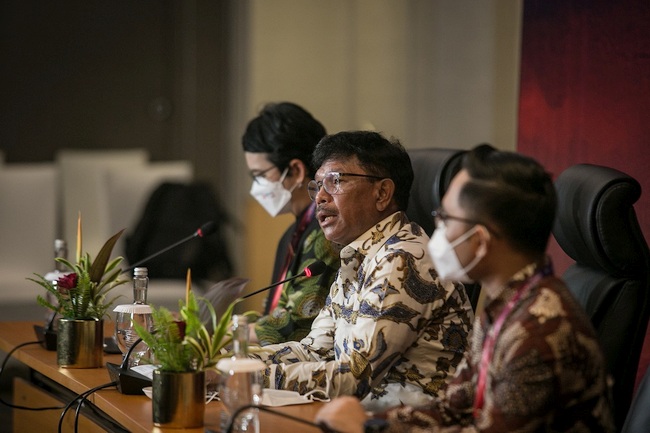
Minister of Communication and Informatics Johnny G Plate, G20 Digital Economy Working Group (DEWG) Chair Mira Tayyiba (L), and G20 DEWG Alternate Chair Dedy Permadi (R), second DEWG meeting in Yogyakarta, 18 May. (ANTARA FOTO/MOHAMMAD AYUDHA)


"I believe we have all witnessed the importance of information and communication technology in helping people cope with the impact of the COVID-19 pandemic," Minister of Communication and Informatics, Johnny G. Plate, stated.

The DEWG is part of the Indonesian G20 Sherpa Track. The working group originated with the formation of the G20 Digital Economy Task Force (DETF) in 2017 during the German G20 presidency.

The working group was mandated to discuss the implementation of an interconnected, protected, and safe digital technology to develop an inclusive, resilient, and sustainable digital economy.

The second DEWG meeting, under Indonesia's G20 presidency, which is being held in Yogyakarta on May 17-19, 2022, discusses the issue of digital connectivity.

As the chair of the 2022 G20 Presidency, Indonesia has encouraged the 2022 G20 DEWG participants to discuss three priority issues: digital connectivity and post-COVID-19 recovery; digital skills and digital literacy; as well as cross-border data flow and trusted free data flow.

At the meeting, Minister Plate emphasized the importance of overcoming the digital divide by building digital connectivity or telecommunications infrastructure.

During the second DEWG meeting, he urged that the discussion focus on inclusiveness, empowerment, and sustainability for strengthening the global position and recovering from the COVID-19 pandemic.

The digital divide has remained an issue until now. According to data from the International Telecommunication Union (ITU), in 2021, a total of 2.9 billion people across the world had never used the Internet.

Meanwhile, according to the World Bank data for Indonesia, 94 million adults could not access the Internet via mobile devices in 2019.

"The digital divide remains a challenge. Those who have access to fixed broadband Internet are even fewer," Plate pointed out.

The digital divide has become one of the reasons for the G20 DEWG forum to discuss the issue of digital connectivity.

The Ministry of Communication and Informatics, which is in charge of the DEWG, is seeking to address the digital divide by strengthening collaboration to drive massive construction of digital infrastructure between G20 member countries and the rest of the world.

Digital Connectivity

The discussion on connectivity has become more relevant in the wake of a global economic turmoil that has affected food, commodities, and energy availability as well as caused the inflation rate to soar.

"The discussion on digital connectivity becomes important at the second DEWG meeting because after the COVID-19 pandemic, the economy is greatly supported through the use of digital connections in solving various community problems as well as empowering the community itself," Minister Plate emphasized.

Plate further accentuated that the pandemic had shown the extent to which people are dependent on digital ecosystems in various public sectors, such as education, health and, of course, economic development.

Taking into account the importance of the digital connectivity issue, the priority issue of DEWG is discussed in five subtopics.

First, Plate said, DEWG discusses a common understanding of digital connectivity by placing the community as the main focus of the digital connectivity development efforts.

"This is what we mean by people-centric digital connectivity," he remarked.

The second subtopic of the digital connectivity discussion at the second DEWG meeting is digital security as a key enabler to support the business community.

The intensification of digital communications indirectly also raises new challenges in the form of various digital security risks that threaten the online safety of internet users, especially the increasingly digital economic actors.

Recognizing the importance of digital security in supporting the sustainability of digital businesses in the future, the DEWG decided to facilitate the collection of existing digital security and safety practices.

On the third subtopic, the Working Group agreed to establish a G20 Digital Innovation Network as a continuation of the G20 Innovation League hosted by the G20 Italian presidency last year.

Such a network aims to accommodate and support the collaboration of digital innovation actors around the world, such as start-ups, venture capitalists, corporations, and governments.

On the fourth subtopic, the G20 DEWG welcomes the implementation of the digital transformation expo that will showcase the achievements of G20 members regarding strategic policies and information on digital transformation.

"The Indonesian G20 presidency hopes that the concept of the event would be welcomed positively and enthusiastically by the holders of the next G20 presidency," Minister Plate stated.

On the fifth subtopic, the G20 DEWG supports the notion from the International Telecommunication Union (ITU) on the smart village and smart island initiative.

"Support for this idea shows Indonesia's commitment to taking advantage of the role of the G20 to solve various issues in the global community. DEWG encourages solidarity in the use of digital transformation, not only from G20 member countries but also non-member countries, especially small island developing states," he stated.

Minister Plate expressed gratitude for the smooth, proper, and focused implementation of the second DEWG meeting.

Plate also reminded all delegates and knowledge partners to join the third DEWG meeting that will be held in Labuan Bajo, East Nusa Tenggara, on July 20-21, 2022.

Written by: Yuni Arisandy Sinaga, Editor: Rahmad Nasution (c) ANTARA 2022

Copyright 2022 ACN Newswire. All rights reserved. http://www.acnnewswire.com
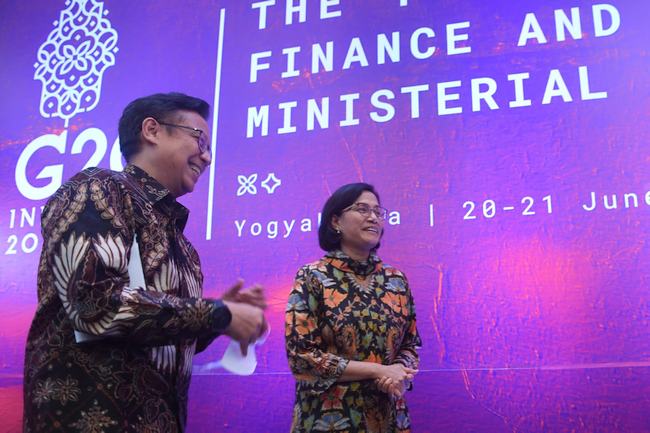
G20 urges World Bank to prepare FIF Establishment: Indrawati

Washington, Apr 21, 2022 – (ACN Newswire) – G20 members have urged the World Bank to immediately prepare for the establishment of the Financial Intermediary Fund (FIF), Finance Minister Sri Mulyani Indrawati stated. FIF should be formed immediately in the framework of pandemic preparedness and response (PPR) in the future, the minister emphasized.


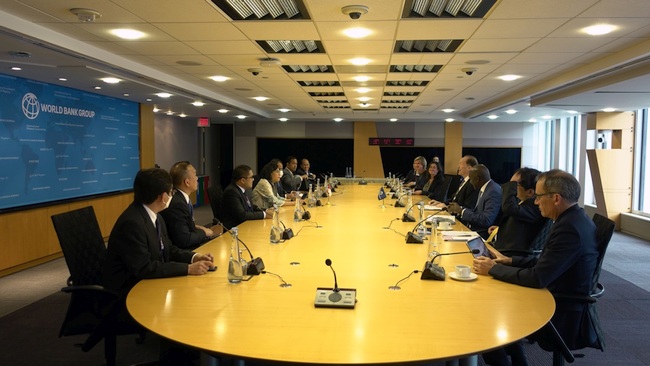
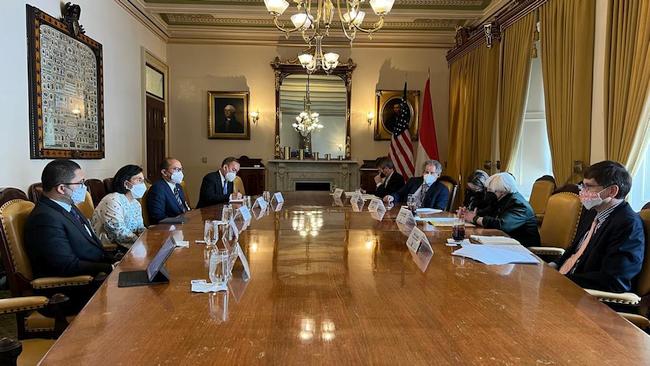
Indonesian Finance Minister Sri Mulyani Indrawati met with World Bank Group President David Malpass at the G20's second meeting of the FMCBG in Washington D.C on Wednesday (April 20, 2022). Minister Indrawati and President Malpass discussed structural reforms and other steps toward a sustainable post-pandemic recovery.


"The (G20) presidency concluded that the World Bank should start exploring the process for developing and establishing FIF," Indrawati remarked at the second meeting of the G20 Finance Ministers and Central Banks Governors (FMCBG) press conference here on Thursday.

G20 members view FIF as being the most effective choice for new financial mechanisms, especially in preparing for other potential pandemics in future. Indrawati believes this is because the establishment of FIF is viewed as being able to overcome the financing gap in the health sector as had occurred during the current COVID-19 pandemic.

"Most (G20) members agree on the need for a new financial mechanism dedicated to addressing the financing gap in PPR," she stated, explaining that G20 members hope that the establishment of FIF would mitigate the health financing needs in line with the World Health Organization's (WHO's) expectations.

Moreover, G20 members called on the World Bank to explore discussions on the governance and operational regulations of FIF by involving the WHO. "There is widespread support for WHO and the World Bank regarding the assessment of significant financing gaps that need to be addressed," Indrawati remarked.

Earlier, on April 1, the Indonesian finance and health ministries resumed the third G20 Joint Finance and Health Task Force (JFHTF). At the meeting, JFHTF co-chair Wempi Saputra invited G20 member countries to draw up a financing action plan for pandemic preparedness and response (PPR).

"The third JFHTF meeting is an important step for all member countries in drafting the financing strategies for prevention, preparedness, and response to the pandemic or PPR," Saputra stated.

Meanwhile, one of the main agendas of Indonesia's G20 Presidency is global health architecture.

Written by Astrid H, Kenzu T, Editor: Suharto (c) ANTARA 2022

Copyright 2022 ACN Newswire. All rights reserved. http://www.acnnewswire.com

G20 hopes Indonesia’s G20 Presidency finds solution to Global Economic Impact of Russia-Ukraine conflict

Washington, Apr 21, 2022 – (ACN Newswire) – The second G20 Finance Ministers and Central Bank Governors (FMCBG) meeting expects Indonesia's G20 Presidency to bring about a solution to the Russia-Ukraine conflict, Indonesian Finance Minister Sri Mulyani Indrawati stated.


The second G20 Finance Ministers and Central Bank Governors (FMCBG) meeting expects Indonesia's G20 Presidency to bring about a solution to the Russia-Ukraine conflict, Indonesian Finance Minister Sri Mulyani Indrawati stated.


"(G20) members hope that the current geopolitical situation, particularly related to the war in Ukraine, will be handled," Indrawati noted at a press conference of the second G20 FMCBG meeting on Thursday.

The expectation is based on the fact that the global situation has worsened and changed rapidly due to the COVID-19 pandemic, coupled with the Russia-Ukraine war, she remarked.

Moreover, the Russia-Ukraine conflict has a very dynamic implication, including on the energy, food, and fertilizer price hike, she affirmed.

Indrawati said Indonesia, which currently holds the G20 presidency, will continue to conduct intensive communication and consultations with all G20 members to address the very dynamic situation.

"The G20 good governance is actually based on consultations as well as cooperation," she remarked.

Indonesia continues to hold discussions with all G20 member states to find ways to get out of the various global economic risks that result not only from the war in Ukraine but also from the pandemic, she stated.

The minister emphasized the current need for an exit strategy since several countries were under the threat of high inflation while the global energy and food price hike will increasingly create a challenging situation for policy makers.

According to Indrawati, G20 members are concerned about inflationary pressures that tend to prompt several central banks to raise the policy interest rates that will eventually lead to faster-than-expected global liquidity tightening.

Hence, the higher level policy becomes the focus to fulfill the exit strategy-related commitment that is well-calibrated, planned, and communicated to support recovery and reduce the potential impact of a spillover, she stressed.

The collective and coordinated actions are not only aimed at mitigating the impact of the Russia-Ukraine war but also at controlling the pandemic. The actions will remain high on the list of G20's priorities, she stated.

G20 members have recorded an increase in the number of COVID-19 cases in several regions that burdened growth, extended supply disruption, worsened inflationary pressure, and slowed down global recovery, she remarked.

Written by Astrid Faidlatul H, Suharto, Editor: Fardah Assegaf (c) ANTARA 2022

Copyright 2022 ACN Newswire. All rights reserved. http://www.acnnewswire.com
Myanmar Government to Accelerate Energy Projects and Amid Power Shortages; Says Sanctions End Up Hurting Foreign Investors, Local Workers and Businesses More

NAY PYI TAW, MM, Apr 21, 2022 – (ACN Newswire) – The Myanmar Government will accelerate development of hydrocarbon and renewable energy even as it repairs power lines damaged by terrorists while seeking to increase foreign investments despite the threat of fresh economic sanctions, the Ministry of Information (MOI) and Ministry of Investment and Foreign Economic Relations (MIFER) announced today.

MOI Minister Mr Maung Maung Ohn and MIFER Minister Mr Aung Naing Oo issued the joint statement in response to recent media reports about energy shortages in the country and exits of some foreign energy companies, and fresh sanctions against Myanmar announced in recent months.

Addressing Energy Shortages in Myanmar

The recent temporary shortage of power was caused by a surge of global liquefied natural gas (LNG) prices, exacerbated by the Russia-Ukraine conflict, a weaker kyat currency as well as terrorist actions linked to the People's Defensive Force (PDF). Apart from advocating a boycott of utility payments since 2021, PDF terrorists blew up power lines from the Lawpita hydroelectric plant in Kayah State. These actions contributed to outages which caused hardship to ordinary citizens and small businesses in particular.

However, despite earlier civil unrest, the country has largely achieved national stability since the second half of 2021. Myanmar Government, under the direction of the State Administration Council (SAC) that was formed on 2 February 2021, is focusing efforts on various mitigating actions regarding the country's energy situation:

i) With the relative stabilization of global energy prices, the Government is seeking to increase use of natural gas for local power generation.

ii) The Government will step up repair of power infrastructure damaged by terrorists and increase security measures.

iii) It will accelerate power generation in the country from oil and gas sources through new investments, partnerships and actions such as conversion to use of existing facilities:

– the new Shwe Gas Pipeline was completed on 18 March 2022 and will generate about 330 MW of regular power.

– Conversion of some fertilizer plants (which use gas as feedstock) for immediate generation of 30 MW of electricity and accelerating works on other gas-fired power generators or waste-heat projects. A total of about 100 MW of electricity has been generated in Kyaukphyu using 20 million cubic feet of gas currently. After pipeline maintenance, this will expand to 30 million cubic feet per day and generate 195 MW.

iv) Major energy projects with China

As its largest neighbour and economic partner, China will play an increasingly important role in energy-related developments in Myanmar.

– With regard to the China-Myanmar pipeline project involving China National Petroleum Corporation (CNPC), the gas pipeline portion was completed at the end of 2013 and the oil pipeline portion was completed in April 2017. The project, which also includes a crude oil terminal, is CNPC's largest investment in Myanmar, and a centerpiece of China's Belt and Road Initiative in the country.

– 3 Chinese companies – Union Resources and Engineering Company (41%), Yunnan Energy Investment (39%) and Zhefu Holding Group (1%) – are partnering Myanmar's -Supreme Group (19%) to develop the 1,390MW Mee Lin Gyaing Project. This facility in Ayeyarwady region involves a LNG-fired power plant, a LNG terminal, a high voltage transmission line and gas pipelines to Yangon. It has been approved by the Myanmar Investment Commission. Currently in the early stages of design and construction, it is expected to start commercial operation in 2027.

Myanmar Government is also proposing to include this high-priority energy project – with an estimated investment value of USD 2.5 billion – in the list of early harvest projects of the China-Myanmar Economic Corridor (CMEC) to enhance bilateral cooperation so as to accelerate its progress.

v) Increase investments in renewable energy

– Solar Energy: More than half of the 40-MW Letpanhla and 30-MW Nyaungbin Gyi solar projects has been completed. To achieve national renewable energy goals, 13 solar power projects which will generate 370 MW have been launched.

While three more solar power projects which will generate 390-megawatt are also planned. Special efforts are being made to promote floating solar projects, rooftop solar projects, and small and medium-sized projects wherever possible.

Tenders are also being called for 18 solar power projects that can generate 635 MW. These are in addition to ongoing negotiations for 11 solar projects which will generate 300 MW that have been invited. Negotiations are underway to sign an agreement for one of them.

– Hydroelectric Power – With more than 60 hydropower dams, hydroelectricity is a key source of energy in the country. The Government is negotiating to purchase about 120 MW of electricity from the Tapin (1) hydropower project soon. The Government will emphasise proper environmental and social impact assessments before approval. Project designs must address such impact and communicate plans and benefits to the relevant communities in order to allay future concerns.

Myanmar plans to achieve national electrification by 2030 and generate 9% of electricity from renewable sources such as hydro and solar power.

Reported Exits of Foreign Oil and Gas Companies

The Ministers said the withdrawal by France's TotalEnergies from the Yadana field and a related gas transportation project will be effective on 20 July 2022. The former's 31.24% stake has been allocated proportionately to the remaining partners in the joint venture.

After the withdrawal of TotalEnergies, Thailand's PTTEP International Limited (PTTEPI) will hold 37.0842% participating interest while Unocal Myanmar Offshore Company Limited, a subsidiary of Chevron Corporation (Chevron) of the United States, will hold 41.1016%, the highest participating interest in the project. Since the first shipment in 1996 about 70% of production from this project, or about 768 million standard cubic feet per day currently, has been sold to Thailand with the rest designated for domestic power generation.

"As this is a change of ownership, operations are not affected. The Yadana field has the largest known Myanmar offshore hydrocarbon reserves. However, production there has declined since end-2021 following 20 years of post-plateau output. Production at this field to date has reached 85% of the recoverable reserves," the Ministers said. Total Energies is not seeking compensation for the withdrawal.

The Ministers said that while Chevron had stated it would exit investments from Myanmar, the Government has to date not received any formal notification from the company.

A third foreign energy company, Woodside Petroleum Ltd of Australia, has recently withdrawn from A6 Natural Gas Project in Rakhine State. Its stake has been taken over by its project partner the MPRL E&P Group of Companies. Operations are also not affected.

Myanmar's Energy Sector Remains Attractive

Despite being one of the world's oldest oil producers (exports started in 1853), Myanmar's upstream sector is still in its infancy due to sanctions, opaque regulatory policy and insufficient investment.

"Although, proven energy reserves are still relatively modest, unofficial estimates are extremely promising. Such fields with potential which are also in proximity to large demand centres in Thailand and China have attracted the interest of several major players. Hence, the Government continues to speed up its reform and has held a number of successful international bids for such hydrocarbon fields," the Ministers said.

Response to Fresh Economic Sanctions Against Myanmar

The Ministers said that external pressure and fresh economic sanctions by several Western countries in recent months may have raised concerns among some foreign investors.

"Economic sanctions may have more negative impact on private sectors than on the Government. Domestic and foreign businessmen and their enterprises, local workers, suppliers and consumers end up suffering the most.

Some sizeable projects that had been approved have commenced construction. Due to the economic sanctions, promoters of some of these projects are now facing obstacles in transferring foreign currency. This has affected progress of the projects.

Should these projects be terminated due to sanctions their investors must repay tax exemptions they enjoyed on top of project costs incurred. Otherwise, their investments will remain in the pending state. Hence, investors may end up leaving Myanmar not because of an unfavourable investment environment but because of external pressures.

Myanmar is committed to providing a secure, accessible and conducive investment environment. We do not wish to see investment withdrawals.

Although the international community publicly discourages economic cooperation with Myanmar, we continue to attract foreign investments. Many of our foreign partners choose to work quietly with us, away from the glare of external publicity, fully recognizing Myanmar's economic potential as well as its unique challenges," the Ministers said.

Energy Sector Remains Priority For Total Investments

The Ministers also gave an update on investments in Myanmar in the last 2 fiscal years. During fiscal 2020-2021 (12 months ended October) and fiscal 2021-2022 (interim budget of 6 months ended March) a total of 82 projects in 12 sectors with investments totaling USD 4.32 billion were approved (USD 3.79 billion in fiscal 2020-2021 and USD 530.775 million fiscal 2021-2022.)

Manufacturing accounted for most projects among 12 sectors in fiscal 2020-2021. However, the Power sector received substantially higher amount of total approved investment of USD 3.12 billion for 6 projects during this period, underscoring the attractiveness of the sector.

Foreign Investments

Most of the countries investing in Myanmar are Singapore, China, Hong Kong, Thailand and South Korea. In fiscal year 2020-2021, a total of 15 projects were from China, and 14 projects were from Singapore.

In 2021-2022 FY, there are 18 projects from China and 6 were from Hong Kong.

Domestic Investments

In the last 2 fiscal years, a total of 93 domestic investment projects (61 in fiscal 2020-2021 and 32 in fiscal 2021-2022) in 12 sectors valued at 2,248.7 billion kyat (1,171.8 billion kyat in fiscal 2020-2021 and 1,076.9 billion kyat in fiscal 2021-2022, respectively) were approved.

A total of 50 projects were from the Manufacturing sector, which is the leading domestic investment category, followed by the Services sector which recorded 14 approved projects while Hotel and Tourism sector was third with 11 projects.

Issued by Ministry of Information and Ministry of Investment and Foreign Economic Relations, Union Government of Myanmar.
For more information, please contact mediacontact@e-information.gov.mm or myintkyawmoi@gmail.com

Copyright 2022 ACN Newswire. All rights reserved. http://www.acnnewswire.com

VFS Global opens new UAE Attestation Centres in the Philippines

MANILA, Jul 28, 2021 – (ACN Newswire) – Customers in the Philippines can directly visit the UAE Attestation Centres located in Makati City, Malate in Manila and Cebu without any prior appointment for document attestation services which commenced on 1 July 2021. Services at the Centre include personal documents (Birth Certificate, Marriage Certificate etc.), educational documents (School Certificate, Diploma etc.), and commercial documents (Business Registrations, Invoices).

Customers who are travelling to UAE or the Middle East can submit their documents in person for attestation by walk-in directly at our new centres that adhere to the stringent safety and physical distancing guidelines prescribed by the World Health Organisation and local authorities. The convenience of doorstep document collection and delivery with real-time tracking of key documents via courier will be made available soon for the residents in these three locations. The mode of payment is cash only at present. Please note that all documents submitted for attestation should already have an apostille by DFA (Department of Foreign Affairs), UAE.

Commenting on the inauguration of the new UAE Attestation Centres, Mr Jiten Vyas, Regional Group COO, VFS Global, "We are excited to extend our long-standing partnership with the Government of the UAE to the next level through the launch of the new Attestation Centres in cooperation with the UAE Ministry of Foreign Affairs. By leveraging on our vast operations network and expertise in Attestation services globally, our newly opened UAE Attestation Centres across the Philippines will offer an enhanced experience for customers with a secure application process and with a range of Value Added Services like pick and drop, end-to-end support, courier, translation etc."

Key advantages of the new UAE Attestation Centre include:
– Secured end to end process legalisation process
– Safety of documents shared for attestation and legalisation
– On-time processing and return of important documents

Important information for UAE attestation services customers in the Philippines:

As the safety of our customers and employees is our priority, VFS Global has implemented strict health and safety measures in line with Government guidelines for physical distancing at the Centres. Customers must wear a face mask/face covering to enter the premises, and a temperature reading will be required on arrival. Customers exhibiting COVID-19 symptoms, including fever (higher than 37.3 degrees Celsius), cough and difficulty in breathing, will not be allowed to proceed with their applications and be allowed to reschedule their appointments for another day.

Customers can visit our website: http://www.vfsattestation.com/philippines/ or call our helpline number +639190615894 or email us infodvpcmnl@dubaivisa.net for more details.

UAE Attestation Centre
– Address in Makati City: VFS Global, Unit M01, Mezzanine Floor, Ecoplaza Building, 2305 Chino Roces Ave.Extension, Makati City, Metro Manila 1231, Philippines
– Address in Malate: VFS Global, Ground Floor, DY International Building, San Marcelino corner Gen. Malvar St. Malate, Manila 1004, Philippines
– Address in Cebu: VFS Global, 5th Floor Unit 503 Kepwealth Center, Samar Loop cor. Cardinal Rosales Avenue, Cebu Business Park, Cebu City 6000, Philippines
Email id: infodvpcmnl@dubaivisa.net
Helpline: +639190615894
Website: http://www.vfsattestation.com/philippines/
Submission Timing: 0900 hrs – 1300 hrs (Monday to Friday, except holidays)

*VFS Global will be responsible only for accepting applications for client missions. All applications submitted will continue to be assessed and processed by the respective client missions. Timelines for turnaround are as per the discretion of the authorities.

About VFS Global

VFS Global is the world's largest outsourcing and technology services specialist for governments and diplomatic missions worldwide. With 3523 Application Centres, operations in 143 countries across five continents and over 230 million applications processed (since inception in 2001) as on 30 June 2021, VFS Global is the trusted partner of 62 client governments. The company manages non-judgmental and administrative tasks related to applications for visa, passport and consular services for its client governments, enabling them to focus entirely on the critical task of assessment.

VFS Global is majority owned by the global investment organisation EQT. The Swiss-based Kuoni and Hugentobler Foundation holds a minority stake in VFS Global. EQT is a global investment organisation with offices in Europe, North America and Asia-Pacific and a 27-year track record of consistent investment performance across multiple geographies, sectors, and strategies. EQT AB Group is listed on the Nasdaq Stockholm stock exchange. EQT manages and advises a range of specialized investment funds and other investment vehicles that invest across the world with the mission to generate attractive returns and future-proof companies. EQT funds' investors do not influence portfolio companies' decision making or strategies. Nor do they have access to private and confidential business assets or client and customer data.

Media Contact
Sukanya Chakraborty
sukanyac@vfsglobal.com
communications@vfsglobal.com

Copyright 2021 ACN Newswire. All rights reserved. http://www.acnnewswire.com